Borg vs. McEnroe
★★★
In a showdown for the ages, two tennis players who seemingly couldn't be any more different go head to head in a titanic clash in the Wimbledon Final of 1980. On one side is Bjorn Borg (Sverrir Gudnason) a Sweedish 4-time Wimbledon champion, with an ice-cold levelheadedness and bottled up emotion. Opposite him is the rising star and #2 in the world John McEnroe (Shia Labeouf) the fiery and rash 'superbrat' desperate to achieve greatness. But rather than being a film about tennis, it focuses more on the dual lead characters, and each of their conflicts and personal battles, before they battle one another in the climax of the film.
Before I get into this, I should say that I am totally throwing away any criticisms of accuracy or embellishment. I have no doubt that the story and the events of the movie were embellished, and I don't care. It's a drama that happens to be based on a real life story, and whether or not the characters in this film are true to real life is not relevant to the success or failure of this movie.
 |
| McEnroe. |
Borg vs. McEnroe is at its best when it's exploring the motivations and the emotional distress of the two central characters. While McEnroe has his own personal struggle to become something better and greater than what his reputation has lain upon him, Borg himself is breaking down under his own weight and gravity. It's an interesting look at two people in a deeply competitive setting, and is written quite sharply. The most poignant moments are when we see the two together. The movie puts it off for some time. They meet in the middle, and at the end, much like Pacino and De Niro in Heat, and even if they don't have the best chemistry, it holds up as we have seen them spill out their hearts and souls before us.
Shia LaBeouf doesn't look like John McEnroe at all, but you can certainly draw parallels between the two. Troubled by their antics and past, and searching for something great. It's a shame really that McEnroe's characterisation often comes across as superficial and in-genuine, despite LaBeouf doing a decent job on the screen, the writing isn't there to back up any sincerity.
Maybe one of the key advantages I had on going into this film was not knowing the result of the Wimbledon final, and as a result, the climactic set piece, the match itself, is riveting and tense as all hell. I had no idea which way it was going to go and I felt sympathies for both of them. Now the problem arises when you do know the result. I have no idea if the last 15 minutes of the movie will be of any interest to someone who knows what happens. The match is shot and cut like an action sequence, but I imagine it would be tiresome when you know how everything is going to go.
Beyond the match itself, the exploration of each player's dynamic isn't sufficient to call it a proper biopic, rather it's more of a story about greatness and how to handle your inner demons. Despite this, not much is actually said. Each of their character arcs is State A to State B, we don't actually get a 'journey' so to speak. In fact, their flashpoint is that they play tennis. Now, this should be expected, since it's a movie about tennis, technically, but to rely on it so heavily as a device for both the plot and subtext moves from 'Tennis' from premise to crutch in Borg vs. McEnroe.
Nonetheless, they make an interesting transition, and along with some solid performances from Gudnanson and LaBeouf (one less expected than the other) and some smart jukebox picks (Call Me, The Big Beat) Borg vs. McEnroe becomes something that is, mostly, entertaining and towards the end, rather gripping, if you don't know what happens, that is.
Shia LaBeouf doesn't look like John McEnroe at all, but you can certainly draw parallels between the two. Troubled by their antics and past, and searching for something great. It's a shame really that McEnroe's characterisation often comes across as superficial and in-genuine, despite LaBeouf doing a decent job on the screen, the writing isn't there to back up any sincerity.
 |
| Borg. |
Maybe one of the key advantages I had on going into this film was not knowing the result of the Wimbledon final, and as a result, the climactic set piece, the match itself, is riveting and tense as all hell. I had no idea which way it was going to go and I felt sympathies for both of them. Now the problem arises when you do know the result. I have no idea if the last 15 minutes of the movie will be of any interest to someone who knows what happens. The match is shot and cut like an action sequence, but I imagine it would be tiresome when you know how everything is going to go.
Beyond the match itself, the exploration of each player's dynamic isn't sufficient to call it a proper biopic, rather it's more of a story about greatness and how to handle your inner demons. Despite this, not much is actually said. Each of their character arcs is State A to State B, we don't actually get a 'journey' so to speak. In fact, their flashpoint is that they play tennis. Now, this should be expected, since it's a movie about tennis, technically, but to rely on it so heavily as a device for both the plot and subtext moves from 'Tennis' from premise to crutch in Borg vs. McEnroe.
 |
| McEnroe - Borg |
Nonetheless, they make an interesting transition, and along with some solid performances from Gudnanson and LaBeouf (one less expected than the other) and some smart jukebox picks (Call Me, The Big Beat) Borg vs. McEnroe becomes something that is, mostly, entertaining and towards the end, rather gripping, if you don't know what happens, that is.
Mississippi Grind
★★★½
Ben Mendlesohn and Ryan Reynolds bounce off each other absolutely flawlessly in the former's best turn for decades, and the latter's best performance ever. Mississipi Grind follows two hopelessly flawed gamblers as they journey down the Mississippi River ("like Huck fuckin' Finn and Jim" as Reynolds' character expertly notes) through the dingy and depressing world of backroom poker. It's an expertly written, acted, directed and produced road movie that is horribly marred by one of the worst endings I have ever seen.
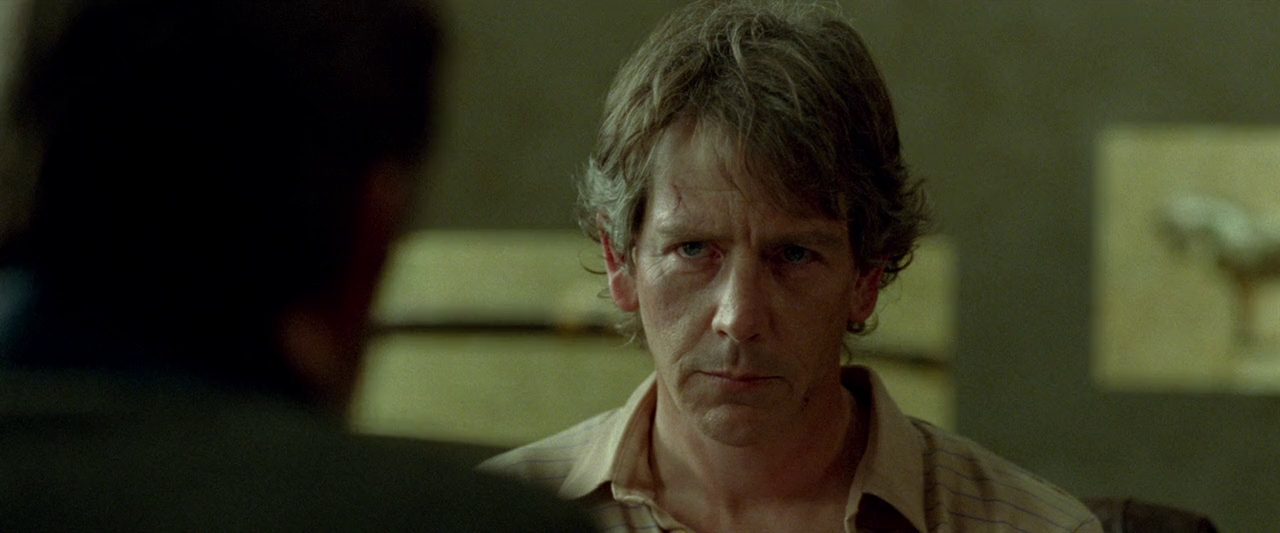 |
| Mendlesohn's back. |
The chemistry between Mendlesohn and Reynolds is absolutely off the charts. In everything they do they develop this platonic relationship that is comradely and romantic. Even through the lower points in their relationship there is a very real and convincing dynamic between the two and their respective problems. Mendlesohn plays Gerry, a man who owes a lot of money to a lot of people, while Reynolds plays Curtis, someone who maintains a facade of control about his life, but is trapped by vices just like Gerry. As a result we see the duo's relationship always hinging on their vices. It creates sympathies for these characters - more so for the increasingly unlikable Gerry, but Mendlesohn plays the sheepish and desperate role to perfection. More so, their relationship creates tension, as the road ahead starts to run out, and their gambling continues, the audience is locked into the road trip with our two (anti) heroes.
Mississippi Grind offers an interesting exploration of camaraderie and loyalty, and these themes are developed subtly and in a funny and interesting way for 90% of the movie. Curtis catches on to Gerry almost immediately - asking "how much money do you owe?" almost as quickly as Gerry latches on to him. Gerry sees Curtis as his lucky charm, everything is at peace and at one when Curtis is near, but most importantly for Gerry, when Curtis is near, he wins. As we continue through the story we see Curtis almost facilitating Gerry's addiction, and depending on how you see it their friendship can be seen in a few ways. Curtis could have some form of saviour complex and be exploiting Gerry, Gerry could be exploiting Curtis' good nature, or, and this was my interpretation, we're watching two deeply co-dependent people trying to overcome their vices. And for 95 minutes this film is a brilliant study into such a difficult and strained topic.
But the last 10 minutes are absolutely shocking. The film betrays itself. Rather than having the balls to go through with its message, or actually find a suitable resolution for the type of ending the writer was going for, we get the equivalent of a microwaved frankfurter in our gourmet sesame seed bun. Rather than figuring out how our characters can actually overcome their vices, or potentially just leaving it open ended, not showing their redemption or any glimmer of hope, the film loads up the cheese and propels it onto the silver screen.
The following contains spoilers for the end of the movie. I would actually really recommend this film, even though the ending kills me inside, so if you haven't seen it I'd advise you don't read on.
They 'overcome' their issues by winning. By gambling, and suddenly they're quite successful. What a great ending eh. Turns out it was a gambling movie after all! Not a deep and intense character/relationship study. No. Rather it's a film about luck and the glamour of gambling - which totally betrays the rest of the movie. It's a shame such a Hollywood ending was written into a film with a production budget of less than a $500,000, but there's no changing it now.
Mississippi Grind offers an interesting exploration of camaraderie and loyalty, and these themes are developed subtly and in a funny and interesting way for 90% of the movie. Curtis catches on to Gerry almost immediately - asking "how much money do you owe?" almost as quickly as Gerry latches on to him. Gerry sees Curtis as his lucky charm, everything is at peace and at one when Curtis is near, but most importantly for Gerry, when Curtis is near, he wins. As we continue through the story we see Curtis almost facilitating Gerry's addiction, and depending on how you see it their friendship can be seen in a few ways. Curtis could have some form of saviour complex and be exploiting Gerry, Gerry could be exploiting Curtis' good nature, or, and this was my interpretation, we're watching two deeply co-dependent people trying to overcome their vices. And for 95 minutes this film is a brilliant study into such a difficult and strained topic.
 |
| "Like Huck fuckin' Finn"... |
But the last 10 minutes are absolutely shocking. The film betrays itself. Rather than having the balls to go through with its message, or actually find a suitable resolution for the type of ending the writer was going for, we get the equivalent of a microwaved frankfurter in our gourmet sesame seed bun. Rather than figuring out how our characters can actually overcome their vices, or potentially just leaving it open ended, not showing their redemption or any glimmer of hope, the film loads up the cheese and propels it onto the silver screen.
The following contains spoilers for the end of the movie. I would actually really recommend this film, even though the ending kills me inside, so if you haven't seen it I'd advise you don't read on.
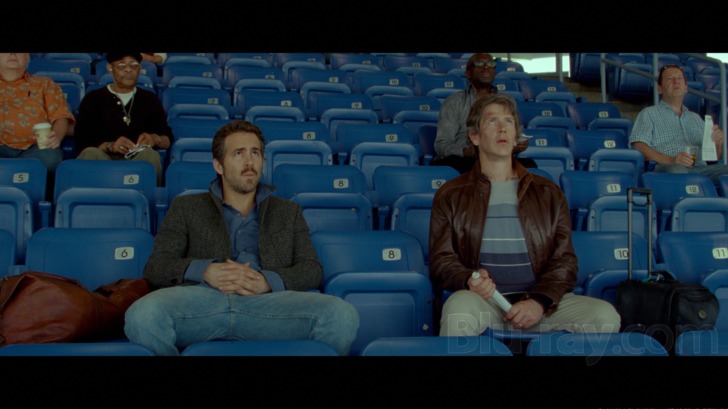 |
| A day at the races. |
