Friday, 15 October 2021

The Decline and Fall of the First French Republic, Part 2

 In the misty fields of eastern Belgium, around 40,000 Frenchmen squared off against around 40,000 Austrians in and around the small village of Neerwinden. This confrontation on the 18th of March in 1793 would be crucial to the future course of the First French Republic. It would be known as the Battle of Neerwinden.

General Charles Dumouriez would lead the French Revolutionary Army into battle. The lower estimates for Dumouriez’s forces were 40,000 foot infantry as well as 4,500 cavalry.1 His opposite number was the Prince of Coburg – Frederick Josias, and is credited with 30,000 foot infantry with 9,000 cavalry by Phipps.2

The French advanced sweeping up the settlements of Racour and Oberwinden, and then Neerwinden. Dumouriez planned to strike the Prince Josias' left flank, believing that his right flank would be strongest in order to defend a potential cut off from coalition communications behind them. Austrian cavalry manoeuvres in the fields between the settlements were very effective, and fierce fighting ensued within the settlements. After being captured by each side a number of times, the Austrians seized Racour and Oberwinden, as well as Neerwinden, before driving the French further back with a cavalry charge. Dumouriez attempted another attack with his right flank, but this along with other French resistance withered away.3 In the morning, Dumouriez ordered a general French retreat from Neerwinden. 4

With the defeat at Neerwinden, Dumouriez was in a dire situation. He had been under criticism from the Jacobins, and four members of the National Convention had been dispatched to oversee his efforts. What Dumouriez did next was, frankly, rash. He had the four deputies from the Convention arrested, as well as the Minister of War – Pierre de Beurnoville and the general handed them over to the coalition forces.

He tried to persuade his men to march with him to Paris, and published a letter saying that if the National Convention did not recognise his absolute leadership, he would force them to.  The army refused, and he ran off and defected to the Austrians.

And that was the end of Dumouriez’s story, as far as we're concerned. He settled in England, and died in Henley-upon-Thames in 1823. But nonetheless he would leave his mark on history as his actions after the Battle of Neerwinden helped shape the future of the First French Republic. Dumouriez was linked with the Girondins, and the war had again turned against France, now on the back foot in the north, and the republic was under threat from its external enemies. But the republic was under threat internally too. The March 1793 Levy caused an uprising in the Vendee – parts of southern France. The central government described these rebels as royalist counter-revolutionaries, although the reality of the situation shows more characteristics of a rebellion of discontent than a rebellion to restore the Bourbons. The peasants in the Vendee were paying more in land tax than they had been paying before the revolution, and the wider economic situation was collapsing. By the end of the winter of 1792-93 grain prices had doubled, and the value of the assignat had halved. Large amounts of the currency (the assingnat) were still being pumped into the economy, against the demands of Saint-Just, which only worsened the economy

The farmer does not want to save paper money and for this reason he is most reluctant to sell his grain.”5

The sale of Church land was also deeply unpopular among the population of the Vendee, as the land was generally bought by the bourgeoisie who raised the rents in these lands.6 The peasants who rebelled ‘looked to the nobles as their natural leaders.’7 The rebellion became so severe that 30,000 soldiers were drawn from the war front to put down the rebellion, but it would be deeply unsuccessful. The war in the Vendee would continue until 1796.

The coalition approach across the Rhine, the loss at Neerwinden, Dumouriez’s defection and the Vendee rebellion saw the young Republic under dire threat. The leadership sought to take decisive action.

President of the National Convention (Presidents were elected for two-week terms) Maxmin Isnard proposed the creation of a Committee of Public Safety – a nine-member executive group to the National Convention. Critically, the measure was endorsed by Danton, who would be instrumental in forming the first version of the CPS. The first CPS would even become known as ‘the Danton committee’.8 Danton was the most powerful member of the CPS, which included four other Montagnards, two Girondins and two members of the Plain. From its formation the CPS was tasked with supervising and speeding up the activity of ministers. The CPS’s powers were confirmed every month, however, by the National Convention. 

The reason for the CPS having a Montagnard majority is the declining influence of the Girondin section of the Jacobin club. After the campaign for war and the trial of the King, they had lost support and suspicion arose about them being traitors to the republic. Dumouriez’s treachery only seemed to confirm to the republicans that they were facing enemies from within, and this feeling was furthered when the extent of the Vendee Rebellion was realised in late March of 1793. As the CPS formed under Danton’s leadership, the Girondin-Montagnard clash would come to a head with the republic entering its first spring.

On the 5th of April, the Jacobins sent out a letter to many of the societies across the country. The letter called for a dismissal of the deputies who had voted to pose the trial of the King to a popular vote, rather than the trial being decided by the National Convention. This had been demanded by the sans-culottes already, but now was seemingly the stance of the head of the Jacobin club. At the time, Jean-Paul Marat was the president of the Jacobins, and had signed the letter. Marat had reacted badly to the loss at Neerwinden, and he would have understood that this letter targeted the Girondins in particular. The letter was sent out some three weeks after Dumouriez’s betrayal, and it was especially alarming for those many deputies who had voted for a popular vote on the King’s life. 8 days later, a Girondin deputy decided to take action. The downward slide for his faction had gone on long enough, and with a speech in the Convention, Marguerite Guadet declared that Marat should be arrested for his signing of the letter which threatened the legitimacy of the Convention itself. The measure was passed by 226 votes to 93. 9

Marat was incredibly popular with the sans-culottes, and his supporters gathered near the Revolutionary Tribunal – a tribunal set up to try those suspected of counter-revolutionary activity. The tribunal itself would go on to be a key mechanism in the Terror, condemning suspects to death in many cases. Danton defended the setting up of the tribunal:

Let us be terrible so that the people will not have to be.”10

In court Marat portrayed himself as a champion of the people, and that the revolution belonged to them, not the Girondins. He claimed he was ‘the apostle and martyr of liberty’. Marat was finally acquitted on the 24th of April, to the jubilation of his followers. A move from the Girondins to take out one of the most influential Montagnards had failed, but they would turn their attacks to the Paris Commune, the birthplace of the Jacobins and the centre of Montagnard power. On the 17th of May Guadet denounced the Paris Commune describing it as “authorities devoted to anarchy” and “political domination”. 11 Guadet declared that the Commune had to be destroyed, and twelve deputies were tasked with its dismantlement – all Girondin – called the Commission of Twelve. The Commission called for Hebert to be arrested on the 24th of May, and in response on the 25th, the Commune demanded that arrested ‘patriots’, including Hebert, be released. Isnard, the man who first proposed the creation of the CPS retorted in extraordinary fashion:

If any attack made on persons representative of the nation, then I declare to you in the name of the whole country that Paris would be destroyed; soon people would be searching along the banks of the Seine to find out whether Paris ever existed.”

The next day, on the 26th, Robespierre called on the people to revolt. The sans-culottes rallied. The contesting factions were pushing each other to the brink, to see who blinks first. From the 31st of May to the 2nd of June, the Girondins and Montagnards would clash for the last time.

An insurrection began on the 31st, and revolutionary delegates from the 33 sections of Paris reinstated the powers of the Commune at around 6:00 am. They told the commune that they were to speak to Francois Hanriot, a battlement commander, and make him the commander of the Paris National Guard. The city gates were closed and the Convention was called to assemble. Brissot and Danton, accompanied by Guadet, Isnard, and Saint-Just made their way to the Convention to observe the demands of the Paris Commune. The demands included the formation of a central revolutionary army, fixing the price of bread, and armouries created for the sans-culottes. Robespierre arrived, and made a speech denouncing and calling for the suppression of the Commission of Twelve. Vergniaud, a Girondin deputy, thought his speech had gone on long enough. He called out for Robespierre to get it over with, to which Robespierre responded:

Yes, I will conclude, but it will be against you! Against you, who…wanted to send those responsible for it to the scaffold; against you, who have never ceased to incite to the destruction of Paris; against you, who wanted to save the tyrant; against you, who conspired with Dumouriez...”12

The Convention agreed to the suppression of the Commission of twelve by the end of the day, but the Commune was not yet satisfied.

The 2nd of June would see the end of the power struggle between the Girondins and Montagnards. The National Guard was still mobilised, and the day before Marat made a return to the Hotel de Ville and called for an assembly. The Commune was to deliver a petition calling for the arrest of the 22 at 18:00, but the Convention dispersed. The tocsin sounded again and the petition was to be given to the CPS to be deliberated over, and a response was to be given within three days.13

Despite this, the next day, a Sunday, Hanriot and his National Guard surrounded the Convention, with a force of 80,000 Frenchmen in arms.14 The session ensuing was bitter. Lanjuinais, a Girondin deputy, and exclaimed in fury at what was, in his opinion, treachery by the Paris Commune. His speech was met with shouting from across the Convention, that he wants a civil war, or a counter-revolution, and that he was insulting the people. His voice rose. Lanjuinais told the Convention that Paris was being oppressed by the Commune, and violence erupted. Various Montagnards raced over to him to rip him down from the tribune, where deputies spoke in the Convention. He held on to the tribune as he was being attacked and continued his speech:

I demand the dissolution of all the revolutionist authorities in Paris. I demand that all they have done in the last three days be declared null.”15

The Commune’s petitioners rushed in, and called for Lanjuinais’ arrest, as well as the twenty-two Girondins for counter-revolutionary rhetoric and activity. It was ruled that the petition was to be decided upon by the CPS. 16

The petitioners stormed out of the Convention, straight to the National Guard. Orders were given to Hanriot that no deputy would be allowed to enter or exit the Convention. While the Girondins were being urged to give up their powers (Isnard, the president of the Convention for two weeks prior did so quickly), Lacroix, a Montagnard deputy came racing into the chamber calling out that he had been ‘insulted’ at the door, and that no-one was allowed to leave. Even Danton said that such a violation of the Convention should be avenged, but the Girondins remained under dire threat. Barrere of the Plain roused the deputies of the Convention to ‘cause the bayonets that surround you to be lowered’, meaning to confront the National Guard.17 Led by the president, Herault, the Convention marched to the exit. And there, at the door, they were greeted by none other than the commander of the National Guard – Hanriot. He looked to the head of the crowd – Herault, who told the commander, not fully grasping the gravity of the situation, that the Convention intended to promote the people’s happiness, asking ‘what do the people require?’18

Hanriot, holding his cannon, spoke to the deputies around Herault.

Tell your stupid president that he and his assembly are fucked, and that if within one hour he doesn’t deliver to me the Twenty-two, I’m going to blast it to the ground.”19

Time had run out for the Girondins. The Assembly were prevented from leaving at every exit from the Convention, and they proceeded to vote for the arrest of twenty-nine Girondin deputies. Among these included Brissot, Guadet, Vergniaud, and Lanjuinais.

Many more Girondins would be proscribed, and the original Twenty-two were tried in the Revolutionary Tribunal beginning on the 24th of October. Lanjuinais managed to escape before this but the Twenty-two were condemned to be executed on the 31st. It took 36 minutes to execute them.20 On the way to their execution they all sang La Marseillaise, and continued as they were executed.21 Vergniaud was the last.22 Marie Phillipon was imprisoned and later executed on the 8th of November. Jean Roland, her husband, upon learning of her fate in Paris, sat down beside a tree, and wrote out a short note:

From the moment when I learned that they had murdered my wife, I would no longer remain in a world stained with enemies.”

Jean proceeded to sink a knife into his chest.

The Girondins were totally removed from the Convention, leaving the government dominated by the Montagnards, and the CPS led by Danton.

Jean-Paul Marat retired. He had been suffering badly from a worsening skin condition, akin to severe eczema. To remedy this, he often bathed in oatmeal, and would do his work on a table above his tub. Despite this he would still carry out official business, sending letters to the Convention, and corresponding with Robespierre and Danton, although they began to distance themselves from the now retired Marat. On the 13th of July, a young woman with brown hair and dark eyes by the name of Charlotte Corday came to Marat’s home with vital information regarding escaped Girondins following the proscriptions in June. Marat’s wife advised against speaking to Corday, but he did so anyway. They spoke for around fifteen minutes, as Corday listed the names of deputies and explained what was happening in Normandy – where the Girondins had escaped to. Corday claimed that Marat said to her “Their heads will fall within a fortnight.”

Then, the twenty-four year old Corday stood up, brandished a knife from her corset, and drove it into Marat’s heart.23

The blood loss was massive. Marat cried out “Help me, my dear friend!” to his wife, and slumped to his death.

Corday was promptly executed four days later, saying that she had killed one man ‘to save 100,000’. Marat died in the vain belief of Corday’s that it would bring the Reign of Terror to an end. Rather, it was with the fall of the Girondins that the Terror began to accelerate. The insurrection of the 31st of May to the 2nd of June saw a clear dominance by one faction for the first time.

Marat’s death would be immortalised by David, in his painting aptly titled – The Assassination of Marat. It shows him dead in his bathtub, in a position similar to a traditional position in which Jesus is portrayed. Marat was not the Jesus of the French Revolution, but his death became one of Montagnard tragedy. His paper The People’s Friend was published for the last time on the 14th of July, and he would become glorified by the Montagnards. Nonetheless his assassination was both a signpost of what the rule of the National Convention had been so far, and what it was to become.

Up until the fall of the Girondins the French Revolution had been a struggle of one ideal against another – at first Royalism vs. Constitutional Monarchism, then Constitutional Monarchism vs. Republicanism. When the struggle of Girondinism and Montagnardism ended - there was no opposition to take the place of the Girondins.

This unrestricted rule combined with the political extremism of the Montagnards would see the Terror become its most terrible, as the CPS came into its position of dominance. Though with the Girondins gone, the Republic was still under dire threat. On the morning of the 2nd of June it was announced in the Convention that in Lyon, Vendee Rebels had seized the local assembly, and some 800 republicans died. The Vendee Rebellion threatened the very existence of the republic as did the approaching coalition in the east. Danton, Robespierre and Saint-Just were tasked with leading the Montagnards, and thus the republic, into the most critical phase of the revolution.


1 Ramsey Phipps, The Armies of the First French Republic and the Rise of the Marshalls under Napoleon I, 2011, p. 155

2 Ibid

3 Rickard, J (12 January 2009), Battle of Neerwinden, 18 March 1793 , http://www.historyofwar.org/articles/battles_neerwinden_1793.html

4 Theodore Dodge, Napoleon: A History of the Art of War: From the Beginning of the French Revolution, P. 103

5 Access to History: France in Revolution P. 95

6 Ibid

7 Ibid

8 Hillary Mantel, 2009, He Roared, London Review of Books. 3 (15): 3–6

9 Albert Sobul, The French Revolution: 1787-1799, 1974, P. 307

10 Citizens: A Chronicle of the French Revolution, Simon Schama, P. 706

11 Albert Soubul, The French Revolution: 1787-1799, P. 309

12 Albert Mathiez, The French Revolution, 1929, P. 324

13 The French Revolution, a Political History, 1789-1804, in 4 vols. Vol. III, François-Alphonse, 1910

14 Access to History: France in Revolution

15 Francois Mignet, History of the French Revolution from 1789 to 1814, 1824, P. 297

16 Ibid

17 Ibid P. 298

18 Ibid

19 David Bell, When Terror Was Young, https://jshare.johnshopkins.edu/myweb/davidbell/andress.pdf

20 Simon Schama, Citizens: A Chronicle of the French Revolution, 1989, P. 803-805

21 William Doyle, The Oxford History of the French Revolution, 1989, P. 289

22 http://www.executedtoday.com/2008/10/31/1793-girondins-girondists-pierre-vergniaud/

23 Well, not quite his heart, very close to it though, and it did cause severe blood loss very quickly

Wednesday, 6 October 2021

The Decline and Fall of the First French Republic, Part 1

The year is 1793, and the King of France, Louis XVI has just been executed. Marie Antoinette, the King’s wife would soon follow, both of whom condemned to death on charges of treason. Treason against France – accused of conspiring against France in what would become known as the War of the First Coalition, when France declared war on Austria after rising tensions following its movement towards republicanism. But now, France has become a republic – the first of its kind in Europe.

The sovereign of France was suddenly and dramatically gone, and a scramble for power ensued. Many of us in western society are lucky enough to see the peaceful transferral of power as, essentially, a given. Arguably we take this for granted, but you don't have to look too far to see what can happen when the order of succession has been muddied. France had the dilemma of having no clear successor to King Louis. 

The National Convention was the representative legislature of France when the King was killed, and after the office of the King was widely seen as the next highest authority in the land. This was particularly so after the predecessor to the Convention – the Constituent Assembly - brought about of the Constitution of 1791. In this constitution feudalism was abolished and limitations were applied to the King’s power and a system of constitutional monarchy was established. In 1793, there was no clear leader amongst the deputies who made up the legislature. The chamber was divided up until the most recent elections between royalists who sat to the right of the speaker, republicans who sat to the left, and independents who sat in between.1

But in the most recent election, the royalists were wiped out of the legislature, and the Convention became stacked with some moderate republicans or constitutionalists and more radical republicans. The republican influence was clearly seen in the vote on the king’s life, where not a single person voted against the execution order, although over 100 abstained. This vote was taken after a debate where a leading republican deputy stated that the vote on the King’s life would be taken publicly, so that traitors in the Assembly are known.

Jean-Paul Marat was a journalist in the early stages of the French Revolution, in his own self-published newspaper – L’Ami du Peuple (The People’s Friend), although before this, he enjoyed a very colourful life. Around 1770, Marat took the decision to move to Newcastle at 26 years old, where, according to his own accounts, he lived on black coffee for months, and produced his first political work – Chains of Slavery.2 He would go on to be a scientist, conducting studies on light, fire, and electricity. He dipped into the medical field, publishing an essay on gonorrhoea and gaining an MD from St. Andrews. By the time Louis was executed, Marat had become a staunch radical republican, whose journalism had taken on fiery criticism of right wing republicans, and he had become part of the Jacobin Club.3

The Jacobin Club began as a broad republican movement within France, and picked up steam following the Flight to Varennes, where the King was caught trying to flee, and marched back to Paris under the National Guard. Despite this, the Jacobins saw splinter groups within it – the more moderate Girondins and the radical Montagnards (The Mountain). The former dominated the party at the time of the execution of the King, but also sought to resist the momentum the revolution had on French society, believing that Europe simply would not accept radical republicanism, as seen with the declaration of Pillnitz, and later, the Brunswick Manifesto. They would come into conflict with the left-wing branch of the party – the Montagnards over these conflicting views. Marat aligned himself with the Montagnards, and criticised the Girondins in The People’s Friend.

He made his beliefs clear – that the death of Louis would have a generally positive effect on France and her people. And so he declared on that fateful night in the Convention, a public vote, so that traitors may be known. But when Marat said this, it was less of an attempt to convince people in the Convention to vote in favour of execution – he could be generally assured of that. In the context of the approaching power struggle, it was more of a threat. Here not only does Marat make it clear that he is one of the leading republican figures to his political rivals, he threatens those he saw as wolves in sheep’s clothing. It was a republican group within the Convention whom he believed to be counter-revolutionary – the Girondins.4

The Girondins were the moderate arm of the Jacobins, although they were becoming increasingly challenged by the rebellious, radical Montagnards. Marat was not the only figure with his crosshairs over the Girondins though; the entire Montagnard faction saw opportunity in the death of the King, and many were afraid of what would happen to the republic if it fell into Girondin hands. But the Montagnards were not about to move their political plans forwards without resistance. The Girondin leader Jacques-Pierre Brissot was one of the most formidable politicians in the French legislature.

Brissot himself had been aligning himself with the Girondins and became a leading figure as the revolution progressed. Although he began life as a law clerk, his works became increasingly critical of the monarchy. He was even imprisoned for his Theorie des lois criminelles in the Bastille, which advocated for penal reform. He founded an anti-slavery group, and became popular for his speeches in the Jacobin club. Brissot curried support in the Legislative Assembly after the Declaration of Pillnitz to take a war footing against Austria, and they eventually did declare war in April of 1792, which we will touch on later. In this the Girondins earned the reputation of being the ‘war party’.5 It should be stressed, though, that there were no parties in the Legislative Assembly. In fact the idea of political parties was frowned upon – seen as ‘pursuing the selfish interests of members rather than the common good of the nation’. They were seen as putting party above country. Rather, these two rival groups were loosely associated deputies, but largely remained loyal to their causes.6

The Girondins and Montagnards were, at their core, similar in their devotion to the republic, being anti-clerical, and wanting a more ‘enlightened and humane France’. But the Montagnards pushed for a powerful central government and tight control over economics. By contrast, Brissot spearheaded the Girondin support of a federal France, with a more liberal economic policy. Their power struggle would be all but decided in two main junctures – the decision for war, and the trial of the King.7

Brissot was instrumental in the Girondin position during the trial of the King. Despite voting for the King’s execution in the end, Brissot and the Girondins were still branded as royalist counter-revolutionaries by the Montagnards. He suggested various alternatives to executing Louis, hoping that his life would be spared. But this would cost Brissot and his faction dearly in the ongoing power struggle. The Montagnards secured the King’s death – and began to find their voice in the Convention.

One of the biggest coups the Montagnards achieved prior to the death of the King was the appointment of Georges Jacques Danton as Minister of Justice. Danton had a bourgeois background, but in 1792 was a champion of the sans-culottes (without-breeches, simply, the common people), as one of the most powerful orators in the Assembly. Danton was an imposing figure, and David Lawday tells us about his role in the early stages of the republic:

His fate was to take charge of the revolution at a critical moment, when it stumbled and risked collapsing, so that France faced a return to the failed old order from which passionate reformers and an angry populace had torn it free.”8

Although originally operating in support of the Girondinist government, he eventually sat side by side with Marat in the legislature, yet he was more measured in his speech than Marat tended to be. Despite this, he was still a brilliant orator. After the Assembly voted to kill the king, Danton emphatically declared:

The kings of Europe would dare challenge us? We throw them the head of a king!”

Danton came to see the Girondins as not able to fully recognise the threat that counter-revolutionaries posed to the republic. Next to Marat, Danton also sat with Maximilien Robespierre, another of the most important Montagnards in the Assembly. Robespierre had been part of the Montagnards since 1792. Another law student, like Danton and Brissot, but Robespierre actually became a judge. Yet he resigned a few years later, after the guilt he felt became too great for sentencing one man to death. After this incident he became an advocate for the poor – taking up the cases of poorer clients so they can have strong legal representation without ruining themselves financially.9

Robespierre was an admirer of the ancient Roman Republic, and fell in love with the great upholders of the republic in its death throes like Cicero and Cato the Younger. Robespierre made his position clear during the trial of King Louis:

Louis must die so that the nation may live.”10

Robespierre would become one of the most controversial figures of the revolution. Much like the other prominent Montagnards, Robespierre had opposed war with Austria. Brissot had claimed that the war would help spread revolutionary ideals abroad, and rouse support for the revolution in France. Brissot even argued France had a great chance of victory because the oppressed masses of other European kingdoms would support the invading French armies. By contrast, France suffered in the early parts of the war, as Prussia and Austria brushed aside resistance as they invaded – seizing Longwy and Verdun in July of 1792. As the invading armies marched further and further into France, it became apparent that Brissot had seemingly made the wrong call. The republic was under dire threat when the Brunswick Manifesto was published, saying that Brunswick intended to restore Louis to his position prior to the revolution, as absolute monarch. This had the opposite effect though. It led to an almost immediate overthrow of the King, when Tuiliers Palace was stormed, and the King taken prisoner, before being deposed by the Convention in September. Almost on the same day as the deposition, the French Revolutionary Army met the Austrian army, and decisively defeated them at the Battle of Valmy, bringing the offensive to a halt. Brissot sighed in relief.

Alongside Brissot as leading Girondins in the Convention was Jean-Marie Roland, an economist who worked closely with Marie-Jeanne Phillipon, his wife. They worked in Lyon during the earlier stages of the revolution and pleaded with the central government for some relief, with the city’s debts and silk business suffering. He often wrote to Paris to negotiate concessions for the city he represented, and in this began regularly corresponding with a young and ambitious Brissot.

The Rolands took the decision to travel to Paris in February of 1791, and met deputies of the convention who would also make up the Girondins later on. The eventually settled on staying in Paris and Marie opened up a salon, which made the Roland name all the more famous in the French capital. Marie’s salon would become a common meeting place for Jacobins, after Jean joined the club. They would entertain various figures crucial to the revolution in Marie’s salon, who would go on to be their bitter political enemies, like Robespierre, or their closest allies, like Brissot. Around a year after arriving in Paris, Jean found himself appointed Minister of the Interior, when Brissot and the Girondins were at the height of their power, pushing the republic forwards.

Yet they suffered a setback in political power after the near-disastrous decision to declare war on Austria, despite the Austrians being likely to invade either way. The course of the war was enough of a setback for the Girondins, particularly following the Montagnards opposition to the war, and Roland, who had become the most prominent Girondin bar Brissot as the Minister of the Interior only helped them to losing the high ground in the convention further.

After Tuiliers Palace had been stormed, an armoire de fer (iron chest) had been found, which contained letters, documents, and general correspondence between King Louis and the leadership of Austria. This discovery damned the King almost certainly to death – and he was charged with high treason. Jean Roland was reinstated as Minister for the Interior after the storming of Tuiliers – he had been dismissed for reading a letter in the King’s presence (written by Marie) that was deemed disrespectful and inconsistent with the position of minister. It had criticised the King’s vetoes of decrees passed by the then Legislative Assembly. Nonetheless, after the storming of the palace and arrest of the King, Roland was in charge of the iron chest. He was to have it be investigated and eventually present the findings to the convention, as evidence for the King’s trial. But Jean, for whatever reason, did something that would cost him dearly. Whether it was a mistake or deliberately, you wonder whether he would have given it a second thought if he knew the consequences.

Roland didn’t seal the chest.

The chest containing crucial evidence proving the King’s treachery of the nation. Roland was quickly accused of tampering with the evidence, destroying some, or attempting to guide the charge of treason away from Louis.

The Montagnards saw this as just another Girondin plot to betray the revolution, but the Girondins believed the Montagnards’ desires to centralise a powerful government was simply a plot to seize power for themselves and betray the revolution. This clash became bitter and divisive in the Convention, where speeches were made from both sides condemning the other. Marat published anti-Girondin articles in The People’s Friend, and Robespierre spoke of Girondin treachery. In protest, Roland resigned as Minister of the Interior when the King was executed. After the debate over the war with Austria and Prussia, and the trial of the King, power had turned away from the Girondins. The Montagnards had the high ground.

No-one was more pleased than Louis Antoine de Saint-Just. Another key Montagnard figure, Saint-Just was a political firebrand – a radical revolutionary republican, with the tongue of a serpent. He became close friends with Robespierre after only arriving in Paris in 1786 at the age of 18. In his home town, Saint-Just had fallen in love with a young woman by the name of Therese Gelle. Tragically for Saint-Just – Therese married the son of a prominent local official while he was out of town, and tradition has it that he was heartbroken. Not two weeks later he set off for the capital, but was stopped by police after his mother reported him. In 1789 he ventured into poetry – writing Organt, poem in twenty cantos, a fantasy medieval epic, it was somewhat juvenile and politically extreme. Satirical, pornographic and attacking the clergy, nobility and monarchy, Saint-Just made his political position clear. It was banned.11

His rise came after a shakeup in his home town’s leadership. It had long been led by the Gelle family (the same Gelle that Therese had come from) but this was challenged when the revolution began in 1789. In the elections of 1790, many of Saint-Just’s friends who had been challenging the Gelle were elected to prominent political positions in the town, and Saint-Just himself joined the National Guard.12

But one thing Saint-Just had above all else was flair. He had a skill for showmanship in the town council – he set a counter-revolutionary leaflet on fire and held his hand in the flame – declaring his love for France and the republic. Saint-Just finally reached the minimum age to be a deputy in the French legislature just in time for the election following the attack on Tuiliers Palace. The arrest of the King saw most of his political rivals resign and retire, and he was elected to the Convention in 1792.13

At the convention he was quiet at first. He didn’t make any speeches or make any declarations. He joined the Jacobins but was part of the Plain (deputies aligned with neither the Girondins nor the Montagnards). Saint-Just was patient, waiting for the right time to step forward and make his position clear. Finally, on the 13th of November 1792, Saint-Just stood up in the Convention, and delivered his first speech:

As for me, I see no middle ground: this man must reign or die! He oppressed a free nation; he declared himself its enemy; he abused the laws: he must die to assure the repose of the people, since it was in his mind to crush the people to assure his own.”14

His speech was met with applause throughout. Robespierre was impressed with the youngest member of the National Convention and spoke later with a similar message. In this Saint-Just almost instantly became one of the most prominent figures of the Jacobin Club, as his and Robespierre’s views became the official policy of the Jacobins. In his conclusion he delivered one of the most telling sentences of the revolution.

No one can reign innocently.”15

Saint-Just was a politician who could utilise simple action to devastating effect, as would become evident over the next phase of the revolution, which would simply become known as The Terror. But after the king died, on the 21st of January 1793, it remained unclear who would lead France into this new age. Brissot and the Girondins, or those simply known as The Mountain – the Montagnards? The stage was set for the two factions to clash, but the opening move would come from someone who wasn’t a politician. In fact, he wasn’t even in France.


A second part will be posted on Friday.


1 Access to History: France in Revolution

2 Les Chaines de l’Esclavage, 1793 (ed. Goetz et de Cock) p4167

3 de Cock, J. & Goetz, C., Œuvres de Jean-Paul Marat, 10 volumes, Éditions Pôle Nord, Brussels, 1995

4 Access to History: France in Revolution

5 Encyclopaedia Britannica

6 Access to History, France in Revolution

7 Ibid

8 David Lawday, Danton

10 Maximilien de Robespierre,  Oeuvres de Maximilien Robespierre, 1958

11 R.R. Palmer, Twelve Who Ruled, 1969

12 Norman Hampson, Saint-Just, 1991, P. 18

13 Ibid, P.26

14 Eugene Newton Curtis, Saint-Just, colleague of Robespierre, P. 38

Tuesday, 20 August 2019

The Postman

The postman is a titan
He strides across the streets
He carries the desires of man
There is an earth beneath his feet
It prays for his return
To understand to learn


The postman is a titan
A murder of crows flies ahead
The clouds watch his trade
Letters end up dead
He patters he does not walk
He does not talk


The postman is a titan
God passes him a line
He leaves from 37
He synthesises purity
He carries with him cruelty
His crime
He reaches out to God with hate
He arrives at number 38


The postman is a titan
He walks beneath the willows
He accepts the generous shade
And then he stirs and starts to grow
He crushes the changeling
And the birds begin to sing


The postman is a titan
And the sun comes back round
He shunts up the gravel
But he doesn't make a sound
And he pushes through the efforts
of man to the roars of cars and children
Above the gassy pipes of London
Below the grassy knolls of heaven
He's on his way again
He's off around the bend


Thursday, 23 November 2017

Blade Runner 2049 and Good Time

Blade Runner 2049


½

"And blood-black nothingness began to spin, a system of cells interlinked within cells interlinked within cells interlinked..."

Image result for blade runner 2049

When a great film of days gone by is rebooted, or given a sequel, there is always, and rightfully so, a sense of trepidation. But when one of the best genre films of all time (as well as single-handedly creating its own sub-genre) gets a sequel, the fear of failure is amplified. Blade Runner was a box office flop - taking $33 Million while needing $56 million to break even. Despite this it garnered a cult following for its inventiveness, world building and entirely new take on the sci-fi genre. After 4 different cuts, the last of which was in 2007, there was rarely any talk of a sequel. Nonetheless 25 years later, and approaching the actual year of 2019 in which the first Blade Runner is set, a sequel was greenlit, and found its way to the big screen.

Image result for blade runner 2049

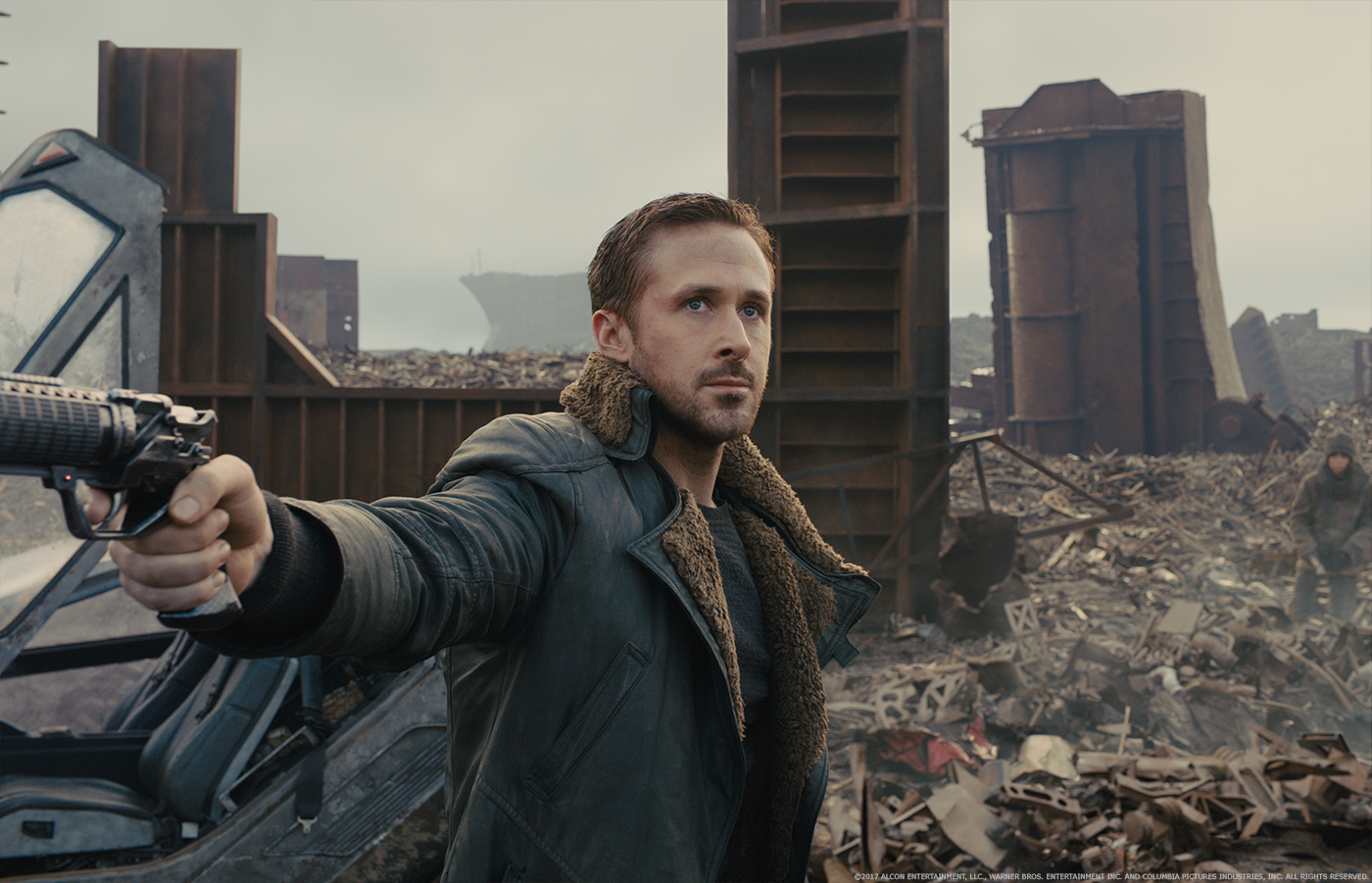
While Blade Runner took a very simple plot (some replicants are here, hunt them down, Deckard.) in a vast and complex world, 2049 goes further, as Officer K (the fantastic Ryan Gosling) discovers something that according to Lt. Joshi (Robin Wright) "Breaks the world". And so he sets off on a vast and expansive mystery and at last we get a feel for the enormousness of what makes up the Blade Runner society. BR2049's world building is spectacular. Entirely confined with dystopian California,  we learn of the events in the 30 years preceding this story, as well as how the country is sustained across its different regions. We travel with K across California and experience the true vastness and implications of the result of the mystery on countless people. By getting a comprehensive look at Blade Runner society in 2049 we learn and become more personal with the stakes of the mystery, as well as learning more about K along the way.

Ryan Gosling delivers yet another standout performance. Fantastic in La La Land, The Big Short, Drive, The Nice Guys, Gosling takes another wicket as the tortured Blade Runner Officer K, and captures your heart through his tragic relatioship with a hologram - Joi. Their struggle together appears unique, and as Joi tells him at one point - special - but K is surrounded by images of the commercialisation of Joi as a hologram, as a product. Gosling's excellence is largely due to his great ability in bringing every corner of his character alive. While he's with Joi you can see his dual torture and acceptance of Joi's lack of physicality.

Image result for blade runner 2049

While Armas (Joi) doesn't have this duality, her descent into desperation is very convincing, especially considering in many of her scenes she won't have been shot opposite Ryan Gosling. Goslings acting also comes alive as we go through the second and third acts, as his character dives deeper into this mystery, where he is stretched to his breaking point. Two standout scenes are the baseline tests, where a rising score, combined with the inflection and vigour of Gosling's voice and piercing stare make for a supremely tense scene.

Elsewhere Harrison Ford looks like he gives a shit for the first time in years. Perhaps he's finally found something he cares about. Deckard returns after going on the run in the time since 2019. The scene in which K and Deckard finally meet is one of the best of the year, set against the orange hue of Blade Runner Las Vegas.

Related image


Director of Photography Roger Deakins absolutely nails this setting, and is the standout of the film. Blade Runner LV is drowned in orange smoke, whilst Los Angeles is a neon dystopia. Every shot is measured, whether flying above the sprawl or confronting a group of savages, BR2049 is a beautifully shot film. Across these three aspects, controlling the sizeable budget against Deakins' lavish cinematography, motivating Harrison Ford to actually work while perfecting Gosling's performance, and top tier world building, makes this Denis Villeneueve's best direction of a project for years. Blade Runner 2049 was such an enormous task, so I believe Villeneueve's direction is better than in that of Arrival or Sicario, even if they are  close to equal as pictures.

Image result for blade runner 2049 orphanage book trailer

Blade Runner 2049 is everything the sequel to Blade Runner should have been and more. It is a high concept sci-fi study into dystopian commercialisation, the struggle of masculinity and the struggle of femininity, as well as asking that age old Blade Runner question, what does it mean to be human? I'll be doing a proper thematic analysis another time, but for today we can stick with Ridley Scott's vision being continued. Villeneueve has ensured with BR2049 that the Blade Runner legacy will not be lost, like tears in the rain.


Good Time


"Don't be confused it'll just make things harder for me."

Image result for good time


Good Time is a panic attack of a movie, that grabs you by the hair and thrusts you into a frantic scramble as you watch Robert Pattinson sprint the streets of New York, sinking further and further into desperation as he tries to get his brother out of jail by the end of the night. Driven forwards by snappy direction and camera work, Good Time is one of the most thrilling films of the year.

It's a simple film really. We open with a big wide shot of New York City, and this is the director telling you this is where we're going to be, take a good long look at it because this is the last time you'll see it in any positive light. Then a series of events leads to Connie Nikas' (Robert Pattinson) brother Nick get landed in jail. Nick is mentally disabled and Connie is convinced he won't survive in prison, tries to rustle up the bail money. Even in the opening moments of the film it is driven forward by a pulsating techno-synth score, which pounds harder than your heart a the Connie stands in a bank mid-heist.

Image result for good time movie

The direction is also excellent from the Safdie Brothers, of whom, Ben plays Nick Nikas. The camera work is claustrophobic, often coming in for tighter shots, but also dissassociative, as in the final sequence. Rather than slow motion and CGI our expectations of how objects are treated are subverted - what's most important we know anyway, and special attention is given to what is seemingly meaningless. This keeps us on edge, and that score is still pulsing away, with all the synths this side of the Hudson.

Related image

Pattinson is brilliant as he slips further and further into his desperation. You get the sense that this race against time is well and truly on, and as the night continues, his schemes and journey become so twisted and absurd that at times he can't believe what's happening to himself. It's a thoroughly New York film, but not the New York of Hollywood. The glitz and glamour are gone, this isn't Friends. This isn't The Devil Wears Prada or Now You See Me. This is Robert Pattinson tackling a security guard and filling his mouth with hallucinogens. It's got a real sense of place and purpose, in a film filled with characters with no direction at all. It's one of the most intense thrill rides of the year, laced with tragedy and comedy, Good Time was great.

Monday, 20 November 2017

The Beguiled and Justice Snorefest

The Beguiled

½

There are few tales that can be read in such a number of different ways as the plot of The Beguiled. The Don Siegel original, adapted from the 1966 novel A Painted Devil, explored much of the same themes as the 2017 remake. Though it is the enormous amount of different readings that makes a remake completely viable. Sofia Coppola retells the story from a new perspective and engages in questions about gender, power, and sexuality in what I believe to be her best work yet.

Related image

We open following a young girl through the woods, in the midst of the American Civil War. She's singing and picking mushrooms, and everything in the world is right, until she comes across an injured soldier. An injured yankee soldier, who she helps back to her home, an all girls boarding school in the deep south. The soldier enters this sexually repressed world dazed and confused, but soon comes to his senses, with every girl fawning over him. We're introduced to the three principal women - Nicole Kidman as Martha, the Headmistres, regular Coppola collaborator Kristen Dunst as Edwina, and Elle Fanning as Alicia, who each seem to represent women at a different stage of sexual naivety and maturity. Martha is matured, far more experienced than her pupils, though repressed by the expectations of the period. Kidman's performance in this role is magnificent. Every look she makes to the other girls carries with it its own cryptic message, beyond the words she might be speaking at the time, sometimes of instruction, of knowing, or of query.

Meanwhile Kirsten Dunst portrays the wholly naive Edwina, who, alongside most of the girls in the school, falls for the yankee soldier, while Elle Fanning takes on the role of Alicia, who, while young, attempts everything in her power to seduce the soldier. With The Beguiled, Coppola was aiming for a more ambiguous telling of the story, and it wholly hinges on the fabulous Colin Farrell as the yankee soldier, whose performance is contained enough for the first 60 minutes of the film to remain tense and suspensful and wonder just who is doing the beguiling and who is the beguiled. 

Image result for the beguiled 2017


The film takes a sinister turn, and it's in this that we begin to see exactly what Coppola wanted to do with the original material. Yet some of the more interesting parts of the film - what does it mean to be a man and power in relationships are glossed over, instead the film focuses on what it means to be a woman. Sisterhood and childhood are touched on, but the three clashing forces - Martha, Edwina, Alicia struggle to find a synthesis of womanhood that goes beyond relation to the man in the story. Rather than being a powerful narrative that addresses the pros and cons of sisterhood and sexuality, The Beguiled falls flat and is rather an incomplete tale of sexual repression, and then, exorcision. But in this the screenplay only falls short of being outstanding, and is certainly strong enough to stand on its own as a remake and re-reading of a classic story.

Justice League


Production budgets for films have increasingly become irrelevant to the quality of the movie, once you pass a certain point. Reservoir Dogs was shot on a shoestring budget, after Harvey Keitel rustled up some cash for Tarantino to make his feature length debut. Sometimes you get oddball stories about a movie's production budget - like the cocaine budget for The Blues Brothers. Today a small budget film would be a $5 million sum, whilst medium would be 5-50, and large being 50+. Dunkirk was shot on a $100 million budget. I say all this to put the following number into context, because without this context it's just a series of digits and what could have been done with it. The production budget for Justice League was $300 million. And good God did it go to waste.

Image result for justice league

Justice League is a movie about a bunch of faceless people flying into other faceless baddies at incredibly high speeds, and then congratulating itself on what a great action set piece that was with a few quips about something nonsensical. Justice League is so incredibly devoid of character and motivation it could be a Michael Bay film. The latest entry in the DC universe is yards better than Batman v. Superman: Dawn of Justice, mostly because Justice League has a plot.

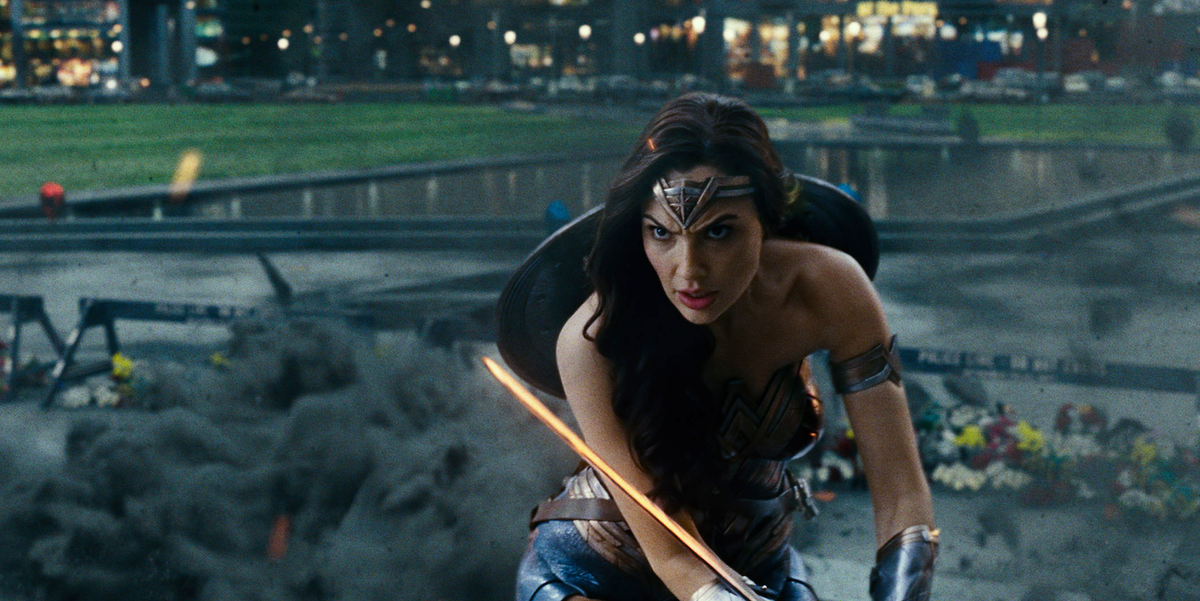
Cyborg is the black one, Flash is the nerdy awkward but hilarious one and Aquaman is there too. Three central characters are characters only in name, despite having no character to speak of. And no, playing The White Stripes as Jason Momoa takes his shirt off and dives into the water does not count as characterisation in any way. Wonder Woman carries much of the film's emotional heart, and plays off of Ben Affleck's Bruce Wayne/Batman fairly well, who also is treated to some characterisation. Of course these two each have had their own films before, one of which was superb (WW) whilst the other was dreadful (Batman v. Superman). But even so we at least had a sense of this brooding Batman that Batfleck wanted to portray in JL from BvS.

Related image

Here's the rub, Justice League was supposed to be 2 hours and 50 minutes long. Now, this would be far too long for any superhero movie, but by God did Justice League need it. Exposition was deivered at a breakneck pace, to the point where there is a solid 10 minutes of exposition dump. The reason for this is almost certainly the Warner Bros mandate that Justice League be no longer than 2 hours. And clocking in at 1 hour 59 minutes (with a hilariously cut final shot) JL sneaks in under the time limit. Now the issue that arises here is that this is a movie with 5 principal characters and lots of major plot beats, and there is absolutely no breathing space. In fact, during the second act of the film there's possibly the fastest philosophical and metaphysical debate ever taken, concerning raising "someone" from the dead. Suddenly, things just happen in Justice League, and that's what you have to deal with.

Every great hero needs a great villain to fight against. And the CGI tower of doom that is Steppenwolf in JL is a pathetic excuse for anything even considered threatening. He's big and he swings a big weapon around and often proclaims he's a very dangerous person who's going to do some very dangerous things. He is so incredibly unremarkable.

Image result

You have to give credit where it's due though. Zack Snyder sure knows how to shoot an action scene. Though the final battle is transformers-esque in its messiness, lots of other set-pieces are directed excellently, particularly the best scene in the movie, which takes place on Wonder Woman's amazonian island as portrayed in her eponymous film. The amazonians take on Steppenwolf and his faceless army on horseback, and desperately try to keep a macguffin away from the big baddie. It's well show and serves for some riveting action, even if you're  unconvinced by the villain.

Good action and comic relief though simply isn't enough to save a film from itself. They injected some levity into the franchise, but the problem was never the tone, it was the poor storytelling, flat characters and erratic pacing that saw Batman v. Superman fall flat, as well as literally everything going wrong with Suicide Squad. As a result, Justice League is a film grounded in a universe of flat characters, poor storytelling and erratic pacing, and reflects that in itself.

Tuesday, 14 November 2017

The Party, The Death of Stalin, and Thor: Ragnarok

The Party

½
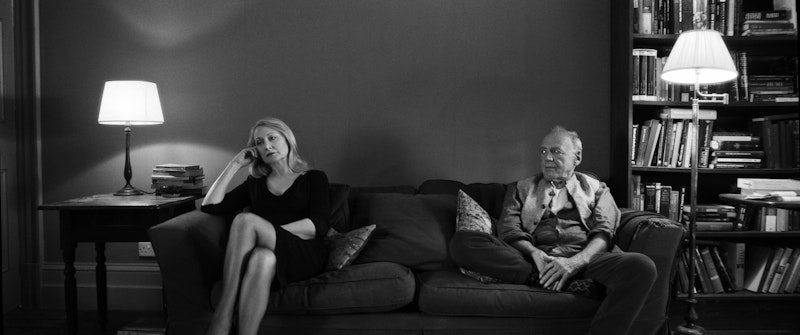
A film that is 71 minutes long has no excuse to be slow to get going, but The Party really does struggle to get its comedic gears turning for the majority of the run time. The social black comedy is about a party for somebody who's just gotten promoted to the Shadow Cabinet for a different type of party, and as the various guests turn up, so do a series of revelations that turns the party into chaos.

Image result for the party movie

The Party has four locations, the main living space, kitchen, bathroom and garden, and as we follow the characters around the house while the party goes on there is a real intimacy of the space you are in. When people move you know where they are going and what that may potentially mean for the plot and for those characters. It is this very physical nature of the movie that is played up for laughs. Cillian Murphy is the jittery, coked-up banker with anger on his mind, while Timothy Spall is still like a statue encased in cement, with the same constant expression on his face, that frankly gets tired after five minutes. In some cases the comedy works, as with Tom (Murphy) or it doesn't, as with Bill (Spall) even though towards the end of the movie the physical comedy plays out very well.

Image result for the party movie sally potter

What Sally Porter apparently failed to realise though is that watching people be awkward isn't very funny. The Party which seemingly relies on its intensely physical and close quarters nature prefers to avoid the physicality, dishing it out sparingly rather than going all out. Now this would have been alright if the dialogue didn't feel so forced. Who are these people who have actual conversations about the development of feminism. One character constantly reminds you she is a realist - not for any character reason of making her appear obnoxious, just because Porter thinks you've already forgotten. An art-house film audience is going to be able to read the subtext, so why does Porter feel the need to bash you over the head with absolutely everything, from the party double entendre to the clunky repetition of plot points, and pseudo political discussion taking place within the party. 

A film with an interesting premise that is executed like the Duke of Monmouth - painfully and slowly. The Party throws a heap at the wall and sees a few fun performances and funny physical moments stick against a black and white subtext and non-existent world building.

The Death of Stalin

When In The Loop released as the best comedy of 2009, we finally saw Armando Ianucci's long-form debut, after writing and directing three series of the BBC comedy from which In The Loop spun off of - The Thick of It. But this alongside his American TV breakthrough Veep have remained the only projects part of the Ianucci empire. Despite his excellent track record, I waltzed into the 20:30 screening with a sense of trepidation, as it would be the first time Ianucci would be writing and directing an adaptation, from a graphic novel no less. But despite this added challenge, and the darkness of the subject matter, The Death of Stalin strikes a great balance between terror and comedy, more so being the latter.

Image result for the death of stalin

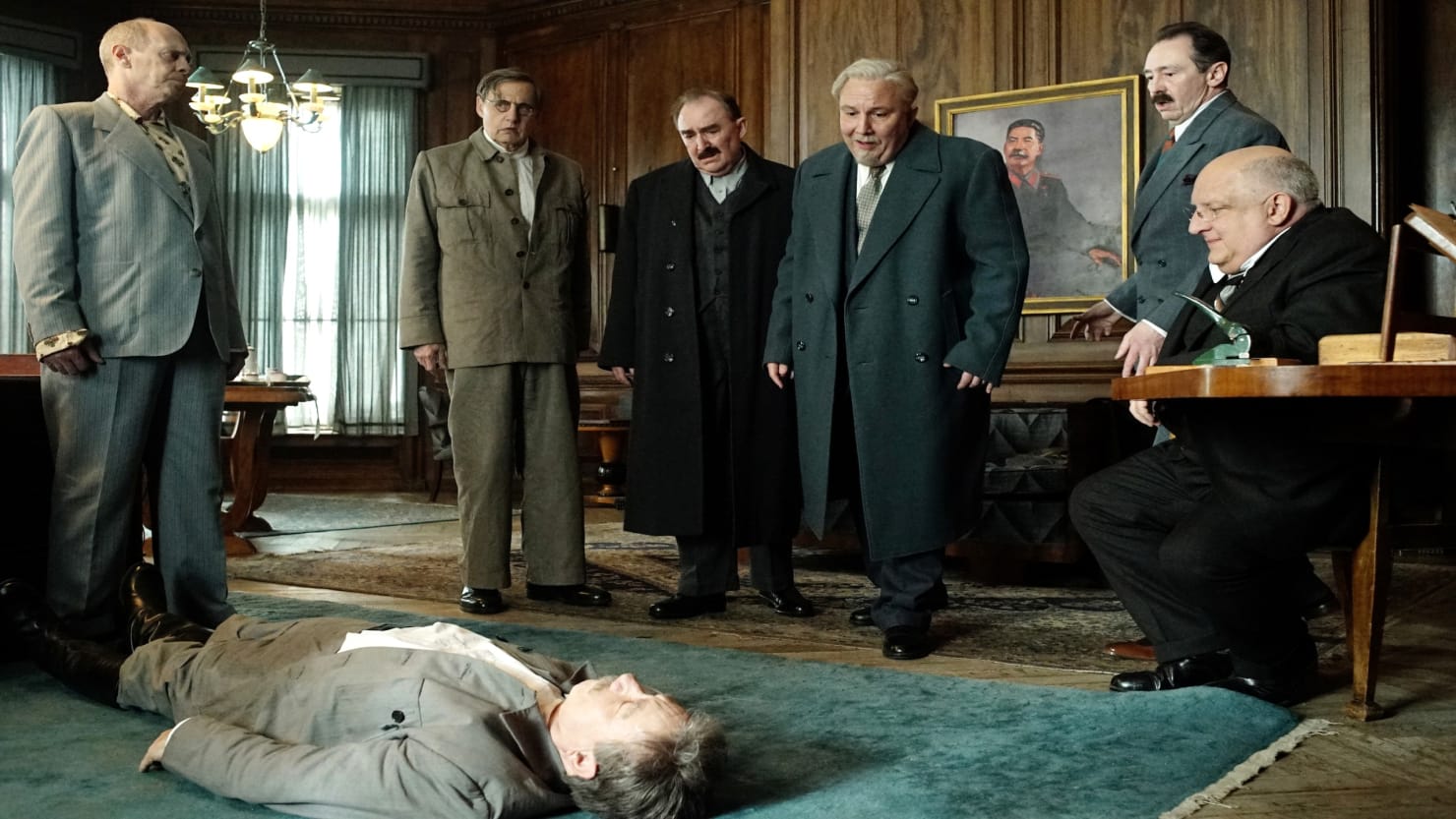
The movie is almost endlessly quotable. Between the personified political bureaucracy and tedium that so often accompanies Ianucci's work in the form of what exactly "all of you" means and the fantastic ensemble of supporting characters, The Death of Stalin is bursting at the seams with laughs. Rupert Friend and Andrea Riseborough play Stalin's son and daughter, whom the politicians are desperate to cater to. Friend is fantastic in his role as the chaotic and uncontrollable son, but with enough nuance in quieter scenes to make the Sverdlovsk plane crash hilarious. (And hello to) Jason Isaacs gloriously plays Georgy Zhukov, the head of the Red Army, bearing seemingly hundreds of medals on his chest and speaking like he's just got off the boat from Hull. The choice to keep accents non-russian only plays up the hilarity and absurdness.

The more overt aspects of Ianucci's directorial style were also more distinctly cinematic. He ditches the handheld cameras used in The Thick of It, Veep and even his other feature, In The Loop. It's a cleaner look that reflects the writer-directors' foray into the world of this wider released picture, much bigger than anything he's done before. Despite this it doesn't lose any of the authenticity or vigour present in his earlier work. The Death of Stalin relies on textbook humour driven by an absurdist plot, and we never lose sight of this in the audience.

Image result for the death of stalin

We watch the story sprawl across Moscow, and the sets have been designed immaculately well. Everything from Stalin's lavish chamber to the dingy back rooms that boast autopsies and executions reflect a looming soviet presence. There are times where you're not sure if what you're watching is a comedy or a tragedy - Molotov's refusal to break the party line being a key part of this. There is no doubt in my mind that this was a hilarious film and anyone else would find it so, but it often strays into a very dark, and towards the end very intense tone. It doesn't feel disjointed as this occurence is constant, but rather makes you as the audience tense up in time with the movie's darker moments, and let go during the hilarity. The climax will leave you crossed between the two.

The Death of Stalin is one of if not the funniest film of the year, and has proven to be moderate box office success. With that out of the way I think we can say hello to Jason Isaacs properly.

Thor: Ragnarok

The third instalment in the Thor franchise and the 17th instalment in the Marvel Cinematic Multi-Comsmoverse comes with the jaunty villain, the witty hero, the witty sidekick, the meta references and oh my God why won't they do something different from the past 16 films. Thor: Ragnarok is such an utterly meh movie but is visually loud enough to keep you interested for around two hours, even if I did fall asleep during the first act. While there is a real hint at story telling beyond the hero saving the day, it struggles to make this vision clear. The film does have a very high laugh ratio, though, and is visually stunning featuring two charismatic leads, and as a result is another respectable entry in the MCU.

Image result for thor ragnarok valkyrie attack

The film likes to play with the idea of place, culture and how this affects power, but not in any consistent way. This philosophical underlining of the film goes absent for much of the movie until is is convenient to the plot, when it did have the potential to be really interesting. Instead the film spends much of its time devoting itself to being part of a much larger franchise - building an odd and frankly superficial relationship between Thor and Hulk, as well as the entirely manufactured arc that Valkyrie has. She was afraid of fighting after a military disaster, but now it's okay because she likes fighting again.  Also she's friends with Thor now. Why? Don't worry. Instead watch the Hulk fight this enormous CGI wolf, doesn't that look cool?

In truth the visual spectacle of Thor: Ragnarok is immense, and addresses some of the photographical issues I've had with other MCU instalments. The saturation and colours are all a bit drab. Now while this is understandable in a grittier film like the first Ironman or Thor: The Dark World, it's odd that it continued in movies that are chock full of comic book explosive fun, like The Avengers or Captain America. Thor 3 ups the ante and delivers an affair bursting with colour. Asgard looks as immense as ever, though there is one sequence in particular which is so spectacular that I completely disregarded how I felt about the film. The scene in which Valkyrie and her comrades are sent in to attack Cate Blanchett's Hela. It is amazing to see how far film has come, especially since the great leap forward of 3D graphics and effects in James Cameron's 2009 epic Avatar. Now we see a fantasy noble guard fly horses with wings into battle against a goddess with a mean blade. And this doesn't let up, there are plenty of stunning sequences like this throughout the film.

Image result for thor ragnarok

The tragedy of the film is this though, for a film and screenplay that wants to be so focused on place, the film itself doesn't know where it stands. The MCU has been walking a line between having extremely high stakes/somewhat taking itself seriously and going too far. Thor: Ragnarok tries to remedy that by throwing in endless snigger worthy lines, for almost every character in the film - seriously. I think everyone in this movie apart from Blanchett has a joke written for them. Though the director himself pops up as the voice of the irresistibly funny kiwi Korg, the film can't help but feel like a glorified comedy - and yet it tries to maintain these world ending, disaster filled stakes. Unlike The Death of Stalin, Thor 3 does not have a skilled enough director or a well enough established 'universe' for this to make sense. And in the end you just feel a bit meh about the climax. That happened. Okay. Do I really care? Where was the payoff? Without a proper subtext then hero movies will always suffer, and Thor 3 did indeed. Probably worth watching, just don't have any expectations aside a few laughs per page.

Thursday, 12 October 2017

Borg vs. McEnroe and Mississippi Grind

Borg vs. McEnroe

In a showdown for the ages, two tennis players who seemingly couldn't be any more different go head to head in a titanic clash in the Wimbledon Final of 1980. On one side is Bjorn Borg (Sverrir Gudnason) a Sweedish 4-time Wimbledon champion, with an ice-cold levelheadedness and bottled up emotion. Opposite him is the rising star and #2 in the world John McEnroe (Shia Labeouf) the fiery and rash 'superbrat' desperate to achieve greatness. But rather than being a film about tennis, it focuses more on the dual lead characters, and each of their conflicts and personal battles, before they battle one another in the climax of the film. 

Before I get into this, I should say that I am totally throwing away any criticisms of accuracy or embellishment. I have no doubt that the story and the events of the movie were embellished, and I don't care. It's a drama that happens to be based on a real life story, and whether or not the characters in this film are true to real life is not relevant to the success or failure of this movie.

Image result for borg vs mcenroe
McEnroe.

Borg vs. McEnroe is at its best when it's exploring the motivations and the emotional distress of the two central characters. While McEnroe has his own personal struggle to become something better and greater than what his reputation has lain upon him, Borg himself is breaking down under his own weight and gravity. It's an interesting look at two people in a deeply competitive setting, and is written quite sharply. The most poignant moments are when we see the two together. The movie puts it off for some time. They meet in the middle, and at the end, much like Pacino and De Niro in Heat, and even if they don't have the best chemistry, it holds up as we have seen them spill out their hearts and souls before us.

Shia LaBeouf doesn't look like John McEnroe at all, but you can certainly draw parallels between the two. Troubled by their antics and past, and searching for something great. It's a shame really that McEnroe's characterisation often comes across as superficial and in-genuine, despite LaBeouf doing a decent job on the screen, the writing isn't there to back up any sincerity.

Image result for borg vs mcenroe
Borg.

Maybe one of the key advantages I had on going into this film was not knowing the result of the Wimbledon final, and as a result, the climactic set piece, the match itself, is riveting and tense as all hell. I had no idea which way it was going to go and I felt sympathies for both of them. Now the problem arises when you do know the result. I have no idea if the last 15 minutes of the movie will be of any interest to someone who knows what happens. The match is shot and cut like an action sequence, but I imagine it would be tiresome when you know how everything is going to go.

Beyond the match itself, the exploration of each player's dynamic isn't sufficient to call it a proper biopic, rather it's more of a story about greatness and how to handle your inner demons. Despite this, not much is actually said. Each of their character arcs is State A to State B, we don't actually get a 'journey' so to speak. In fact, their flashpoint is that they play tennis. Now, this should be expected, since it's a movie about tennis, technically, but to rely on it so heavily as a device for both the plot and subtext moves from 'Tennis' from premise to crutch in Borg vs. McEnroe.

Image result for borg vs mcenroe
McEnroe - Borg

Nonetheless, they make an interesting transition, and along with some solid performances from Gudnanson and LaBeouf (one less expected than the other) and some smart jukebox picks (Call Me, The Big Beat) Borg vs. McEnroe becomes something that is, mostly, entertaining and towards the end, rather gripping, if you don't know what happens, that is.

Mississippi Grind

½

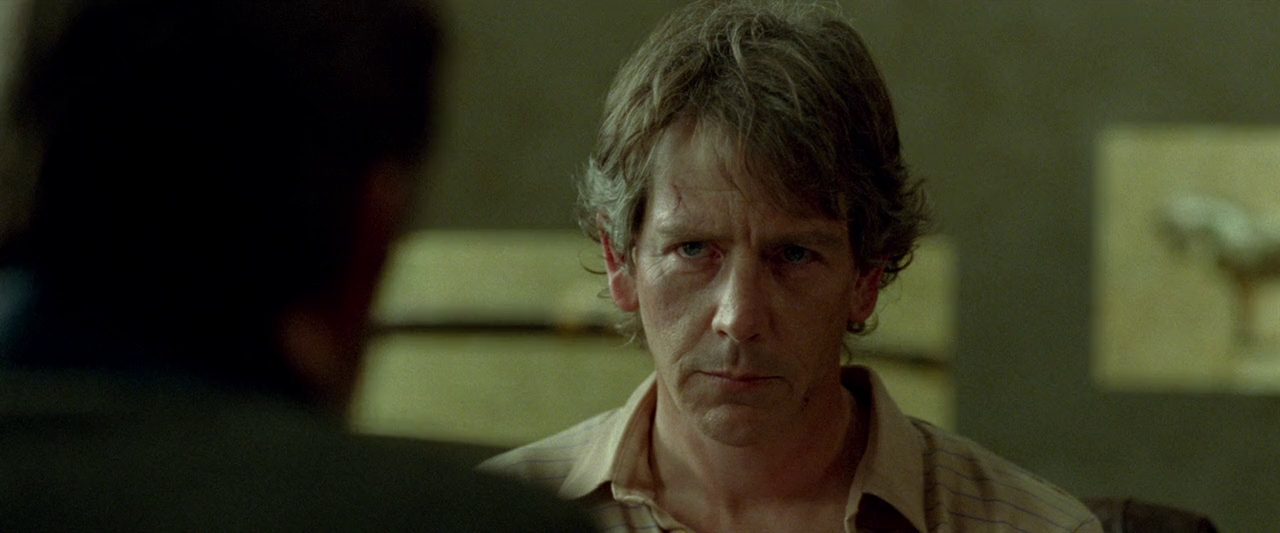
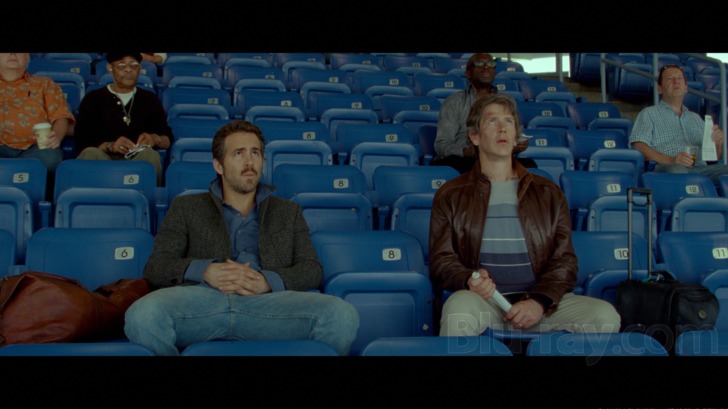
Ben Mendlesohn and Ryan Reynolds bounce off each other absolutely flawlessly in the former's best turn for decades, and the latter's best performance ever. Mississipi Grind follows two hopelessly flawed gamblers as they journey down the Mississippi River ("like Huck fuckin' Finn and Jim" as Reynolds' character expertly notes) through the dingy and depressing world of backroom poker. It's an expertly written, acted, directed and produced road movie that is horribly marred by one of the worst endings I have ever seen.

Image result for mississippi grind
Mendlesohn's back.

The chemistry between Mendlesohn and Reynolds is absolutely off the charts. In everything they do they develop this platonic relationship that is comradely and romantic. Even through the lower points in their relationship there is a very real and convincing dynamic between the two and their respective problems. Mendlesohn plays Gerry, a man who owes a lot of money to a lot of people, while Reynolds plays Curtis, someone who maintains a facade of control about his life, but is trapped by vices just like Gerry. As a result we see the duo's relationship always hinging on their vices. It creates sympathies for these characters - more so for the increasingly unlikable Gerry, but Mendlesohn plays the sheepish and desperate role to perfection. More so, their relationship creates tension, as the road ahead starts to run out, and their gambling continues, the audience is locked into the road trip with our two (anti) heroes.

Mississippi Grind offers an interesting exploration of camaraderie and loyalty, and these themes are developed subtly and in a funny and interesting way for 90% of the movie. Curtis catches on to Gerry almost immediately - asking "how much money do you owe?" almost as quickly as Gerry latches on to him. Gerry sees Curtis as his lucky charm, everything is at peace and at one when Curtis is near, but most importantly for Gerry, when Curtis is near, he wins. As we continue through the story we see Curtis almost facilitating Gerry's addiction, and depending on how you see it their friendship can be seen in a few ways. Curtis could have some form of saviour complex and be exploiting Gerry, Gerry could be exploiting Curtis' good nature, or, and this was my interpretation, we're watching two deeply co-dependent people trying to overcome their vices. And for 95 minutes this film is a brilliant study into such a difficult and strained topic.

"Like Huck fuckin' Finn"...


But the last 10 minutes are absolutely shocking. The film betrays itself. Rather than having the balls to go through with its message, or actually find a suitable resolution for the type of ending the writer was going for, we get the equivalent of a microwaved frankfurter in our gourmet sesame seed bun. Rather than figuring out how our characters can actually overcome their vices, or potentially just leaving it open ended, not showing their redemption or any glimmer of hope, the film loads up the cheese and propels it onto the silver screen.
The following contains spoilers for the end of the movie. I would actually really recommend this film, even though the ending kills me inside, so if you haven't seen it I'd advise you don't read on.


Image result for mississippi grind
A day at the races.
They 'overcome' their issues by winning. By gambling, and suddenly they're quite successful. What a great ending eh. Turns out it was a gambling movie after all! Not a deep and intense character/relationship study. No. Rather it's a film about luck and the glamour of gambling - which totally betrays the rest of the movie. It's a shame such a Hollywood ending was written into a film with a production budget of less than a $500,000, but there's no changing it now.