The Beguiled
★★★½
There are few tales that can be read in such a number of different ways as the plot of The Beguiled. The Don Siegel original, adapted from the 1966 novel A Painted Devil, explored much of the same themes as the 2017 remake. Though it is the enormous amount of different readings that makes a remake completely viable. Sofia Coppola retells the story from a new perspective and engages in questions about gender, power, and sexuality in what I believe to be her best work yet.

We open following a young girl through the woods, in the midst of the American Civil War. She's singing and picking mushrooms, and everything in the world is right, until she comes across an injured soldier. An injured yankee soldier, who she helps back to her home, an all girls boarding school in the deep south. The soldier enters this sexually repressed world dazed and confused, but soon comes to his senses, with every girl fawning over him. We're introduced to the three principal women - Nicole Kidman as Martha, the Headmistres, regular Coppola collaborator Kristen Dunst as Edwina, and Elle Fanning as Alicia, who each seem to represent women at a different stage of sexual naivety and maturity. Martha is matured, far more experienced than her pupils, though repressed by the expectations of the period. Kidman's performance in this role is magnificent. Every look she makes to the other girls carries with it its own cryptic message, beyond the words she might be speaking at the time, sometimes of instruction, of knowing, or of query.
Meanwhile Kirsten Dunst portrays the wholly naive Edwina, who, alongside most of the girls in the school, falls for the yankee soldier, while Elle Fanning takes on the role of Alicia, who, while young, attempts everything in her power to seduce the soldier. With The Beguiled, Coppola was aiming for a more ambiguous telling of the story, and it wholly hinges on the fabulous Colin Farrell as the yankee soldier, whose performance is contained enough for the first 60 minutes of the film to remain tense and suspensful and wonder just who is doing the beguiling and who is the beguiled.

The film takes a sinister turn, and it's in this that we begin to see exactly what Coppola wanted to do with the original material. Yet some of the more interesting parts of the film - what does it mean to be a man and power in relationships are glossed over, instead the film focuses on what it means to be a woman. Sisterhood and childhood are touched on, but the three clashing forces - Martha, Edwina, Alicia struggle to find a synthesis of womanhood that goes beyond relation to the man in the story. Rather than being a powerful narrative that addresses the pros and cons of sisterhood and sexuality, The Beguiled falls flat and is rather an incomplete tale of sexual repression, and then, exorcision. But in this the screenplay only falls short of being outstanding, and is certainly strong enough to stand on its own as a remake and re-reading of a classic story.
Justice League
★★

Justice League is a movie about a bunch of faceless people flying into other faceless baddies at incredibly high speeds, and then congratulating itself on what a great action set piece that was with a few quips about something nonsensical. Justice League is so incredibly devoid of character and motivation it could be a Michael Bay film. The latest entry in the DC universe is yards better than Batman v. Superman: Dawn of Justice, mostly because Justice League has a plot.
Cyborg is the black one, Flash is the nerdy awkward but hilarious one and Aquaman is there too. Three central characters are characters only in name, despite having no character to speak of. And no, playing The White Stripes as Jason Momoa takes his shirt off and dives into the water does not count as characterisation in any way. Wonder Woman carries much of the film's emotional heart, and plays off of Ben Affleck's Bruce Wayne/Batman fairly well, who also is treated to some characterisation. Of course these two each have had their own films before, one of which was superb (WW) whilst the other was dreadful (Batman v. Superman). But even so we at least had a sense of this brooding Batman that Batfleck wanted to portray in JL from BvS.

Here's the rub, Justice League was supposed to be 2 hours and 50 minutes long. Now, this would be far too long for any superhero movie, but by God did Justice League need it. Exposition was deivered at a breakneck pace, to the point where there is a solid 10 minutes of exposition dump. The reason for this is almost certainly the Warner Bros mandate that Justice League be no longer than 2 hours. And clocking in at 1 hour 59 minutes (with a hilariously cut final shot) JL sneaks in under the time limit. Now the issue that arises here is that this is a movie with 5 principal characters and lots of major plot beats, and there is absolutely no breathing space. In fact, during the second act of the film there's possibly the fastest philosophical and metaphysical debate ever taken, concerning raising "someone" from the dead. Suddenly, things just happen in Justice League, and that's what you have to deal with.
Every great hero needs a great villain to fight against. And the CGI tower of doom that is Steppenwolf in JL is a pathetic excuse for anything even considered threatening. He's big and he swings a big weapon around and often proclaims he's a very dangerous person who's going to do some very dangerous things. He is so incredibly unremarkable.
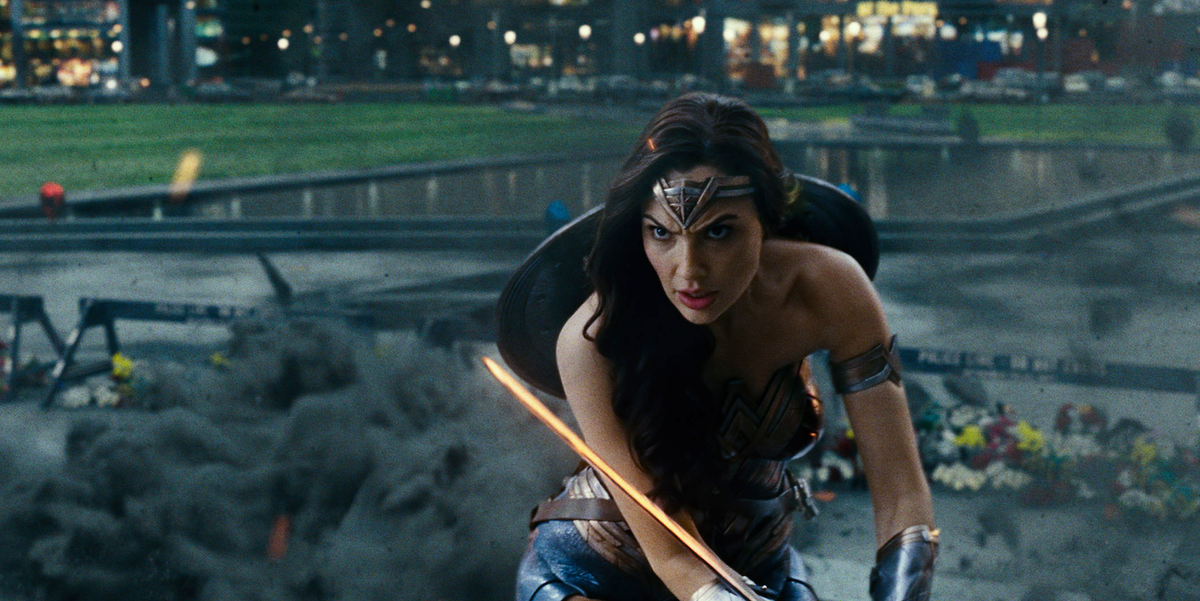
You have to give credit where it's due though. Zack Snyder sure knows how to shoot an action scene. Though the final battle is transformers-esque in its messiness, lots of other set-pieces are directed excellently, particularly the best scene in the movie, which takes place on Wonder Woman's amazonian island as portrayed in her eponymous film. The amazonians take on Steppenwolf and his faceless army on horseback, and desperately try to keep a macguffin away from the big baddie. It's well show and serves for some riveting action, even if you're unconvinced by the villain.
Good action and comic relief though simply isn't enough to save a film from itself. They injected some levity into the franchise, but the problem was never the tone, it was the poor storytelling, flat characters and erratic pacing that saw Batman v. Superman fall flat, as well as literally everything going wrong with Suicide Squad. As a result, Justice League is a film grounded in a universe of flat characters, poor storytelling and erratic pacing, and reflects that in itself.

No comments:
Post a Comment