The Party
★★½
A film that is 71 minutes long has no excuse to be slow to get going, but The Party really does struggle to get its comedic gears turning for the majority of the run time. The social black comedy is about a party for somebody who's just gotten promoted to the Shadow Cabinet for a different type of party, and as the various guests turn up, so do a series of revelations that turns the party into chaos.

The Party has four locations, the main living space, kitchen, bathroom and garden, and as we follow the characters around the house while the party goes on there is a real intimacy of the space you are in. When people move you know where they are going and what that may potentially mean for the plot and for those characters. It is this very physical nature of the movie that is played up for laughs. Cillian Murphy is the jittery, coked-up banker with anger on his mind, while Timothy Spall is still like a statue encased in cement, with the same constant expression on his face, that frankly gets tired after five minutes. In some cases the comedy works, as with Tom (Murphy) or it doesn't, as with Bill (Spall) even though towards the end of the movie the physical comedy plays out very well.
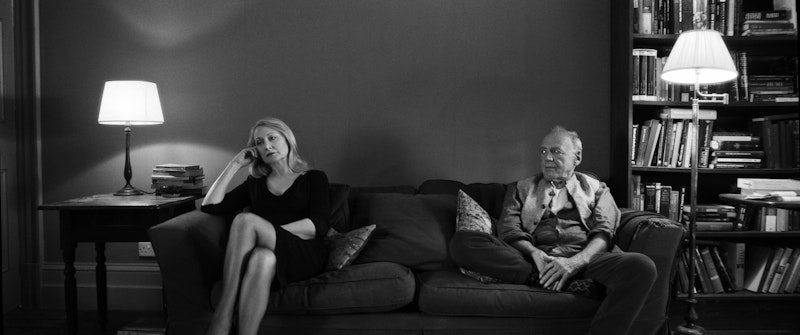
What Sally Porter apparently failed to realise though is that watching people be awkward isn't very funny. The Party which seemingly relies on its intensely physical and close quarters nature prefers to avoid the physicality, dishing it out sparingly rather than going all out. Now this would have been alright if the dialogue didn't feel so forced. Who are these people who have actual conversations about the development of feminism. One character constantly reminds you she is a realist - not for any character reason of making her appear obnoxious, just because Porter thinks you've already forgotten. An art-house film audience is going to be able to read the subtext, so why does Porter feel the need to bash you over the head with absolutely everything, from the party double entendre to the clunky repetition of plot points, and pseudo political discussion taking place within the party.
A film with an interesting premise that is executed like the Duke of Monmouth - painfully and slowly. The Party throws a heap at the wall and sees a few fun performances and funny physical moments stick against a black and white subtext and non-existent world building.
The Death of Stalin
★★★★
When In The Loop released as the best comedy of 2009, we finally saw Armando Ianucci's long-form debut, after writing and directing three series of the BBC comedy from which In The Loop spun off of - The Thick of It. But this alongside his American TV breakthrough Veep have remained the only projects part of the Ianucci empire. Despite his excellent track record, I waltzed into the 20:30 screening with a sense of trepidation, as it would be the first time Ianucci would be writing and directing an adaptation, from a graphic novel no less. But despite this added challenge, and the darkness of the subject matter, The Death of Stalin strikes a great balance between terror and comedy, more so being the latter.
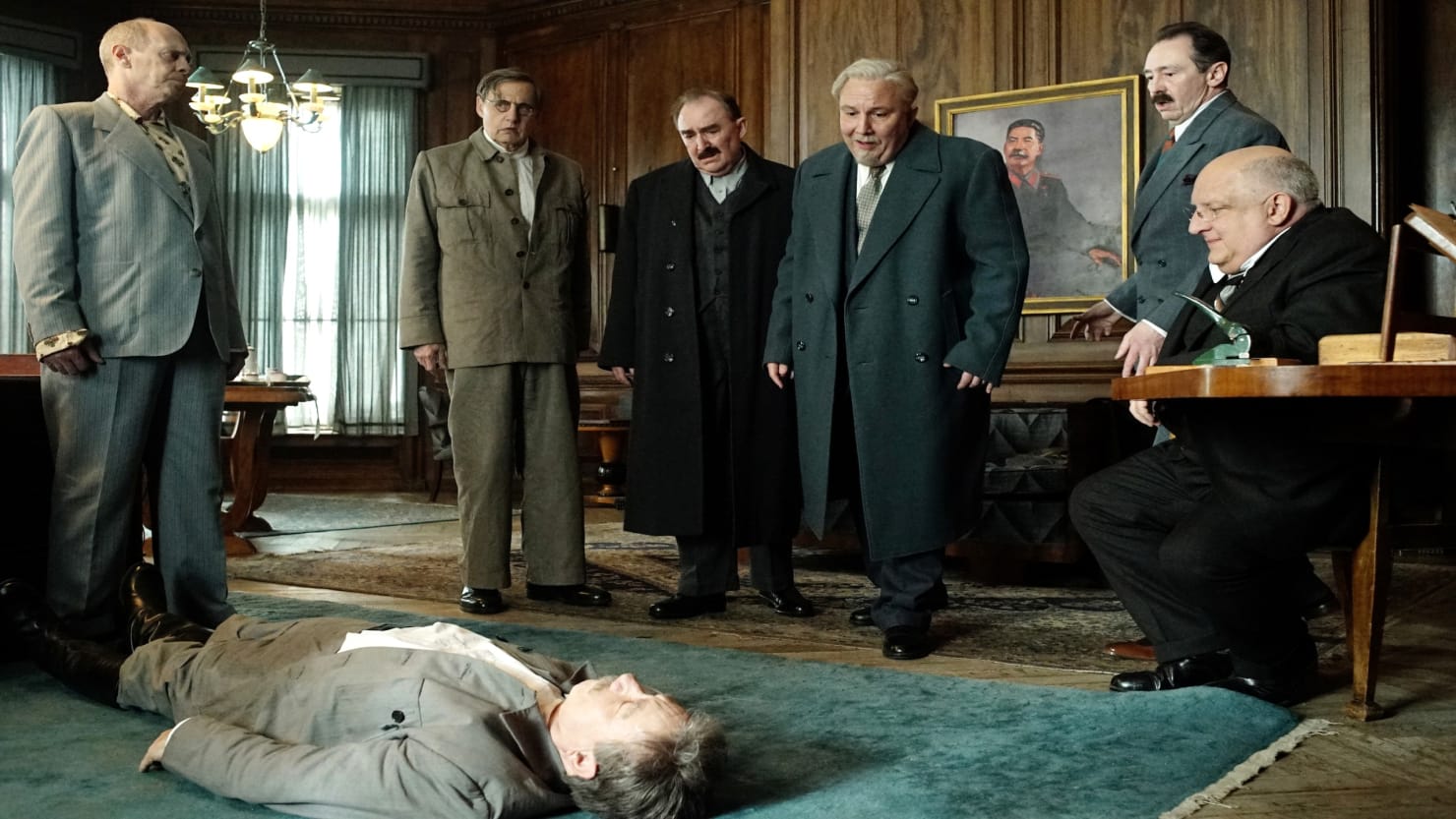
The movie is almost endlessly quotable. Between the personified political bureaucracy and tedium that so often accompanies Ianucci's work in the form of what exactly "all of you" means and the fantastic ensemble of supporting characters, The Death of Stalin is bursting at the seams with laughs. Rupert Friend and Andrea Riseborough play Stalin's son and daughter, whom the politicians are desperate to cater to. Friend is fantastic in his role as the chaotic and uncontrollable son, but with enough nuance in quieter scenes to make the Sverdlovsk plane crash hilarious. (And hello to) Jason Isaacs gloriously plays Georgy Zhukov, the head of the Red Army, bearing seemingly hundreds of medals on his chest and speaking like he's just got off the boat from Hull. The choice to keep accents non-russian only plays up the hilarity and absurdness.
The more overt aspects of Ianucci's directorial style were also more distinctly cinematic. He ditches the handheld cameras used in The Thick of It, Veep and even his other feature, In The Loop. It's a cleaner look that reflects the writer-directors' foray into the world of this wider released picture, much bigger than anything he's done before. Despite this it doesn't lose any of the authenticity or vigour present in his earlier work. The Death of Stalin relies on textbook humour driven by an absurdist plot, and we never lose sight of this in the audience.

We watch the story sprawl across Moscow, and the sets have been designed immaculately well. Everything from Stalin's lavish chamber to the dingy back rooms that boast autopsies and executions reflect a looming soviet presence. There are times where you're not sure if what you're watching is a comedy or a tragedy - Molotov's refusal to break the party line being a key part of this. There is no doubt in my mind that this was a hilarious film and anyone else would find it so, but it often strays into a very dark, and towards the end very intense tone. It doesn't feel disjointed as this occurence is constant, but rather makes you as the audience tense up in time with the movie's darker moments, and let go during the hilarity. The climax will leave you crossed between the two.
The Death of Stalin is one of if not the funniest film of the year, and has proven to be moderate box office success. With that out of the way I think we can say hello to Jason Isaacs properly.
We watch the story sprawl across Moscow, and the sets have been designed immaculately well. Everything from Stalin's lavish chamber to the dingy back rooms that boast autopsies and executions reflect a looming soviet presence. There are times where you're not sure if what you're watching is a comedy or a tragedy - Molotov's refusal to break the party line being a key part of this. There is no doubt in my mind that this was a hilarious film and anyone else would find it so, but it often strays into a very dark, and towards the end very intense tone. It doesn't feel disjointed as this occurence is constant, but rather makes you as the audience tense up in time with the movie's darker moments, and let go during the hilarity. The climax will leave you crossed between the two.
The Death of Stalin is one of if not the funniest film of the year, and has proven to be moderate box office success. With that out of the way I think we can say hello to Jason Isaacs properly.
Thor: Ragnarok
★★★
The third instalment in the Thor franchise and the 17th instalment in the Marvel Cinematic Multi-Comsmoverse comes with the jaunty villain, the witty hero, the witty sidekick, the meta references and oh my God why won't they do something different from the past 16 films. Thor: Ragnarok is such an utterly meh movie but is visually loud enough to keep you interested for around two hours, even if I did fall asleep during the first act. While there is a real hint at story telling beyond the hero saving the day, it struggles to make this vision clear. The film does have a very high laugh ratio, though, and is visually stunning featuring two charismatic leads, and as a result is another respectable entry in the MCU.

The film likes to play with the idea of place, culture and how this affects power, but not in any consistent way. This philosophical underlining of the film goes absent for much of the movie until is is convenient to the plot, when it did have the potential to be really interesting. Instead the film spends much of its time devoting itself to being part of a much larger franchise - building an odd and frankly superficial relationship between Thor and Hulk, as well as the entirely manufactured arc that Valkyrie has. She was afraid of fighting after a military disaster, but now it's okay because she likes fighting again. Also she's friends with Thor now. Why? Don't worry. Instead watch the Hulk fight this enormous CGI wolf, doesn't that look cool?
In truth the visual spectacle of Thor: Ragnarok is immense, and addresses some of the photographical issues I've had with other MCU instalments. The saturation and colours are all a bit drab. Now while this is understandable in a grittier film like the first Ironman or Thor: The Dark World, it's odd that it continued in movies that are chock full of comic book explosive fun, like The Avengers or Captain America. Thor 3 ups the ante and delivers an affair bursting with colour. Asgard looks as immense as ever, though there is one sequence in particular which is so spectacular that I completely disregarded how I felt about the film. The scene in which Valkyrie and her comrades are sent in to attack Cate Blanchett's Hela. It is amazing to see how far film has come, especially since the great leap forward of 3D graphics and effects in James Cameron's 2009 epic Avatar. Now we see a fantasy noble guard fly horses with wings into battle against a goddess with a mean blade. And this doesn't let up, there are plenty of stunning sequences like this throughout the film.
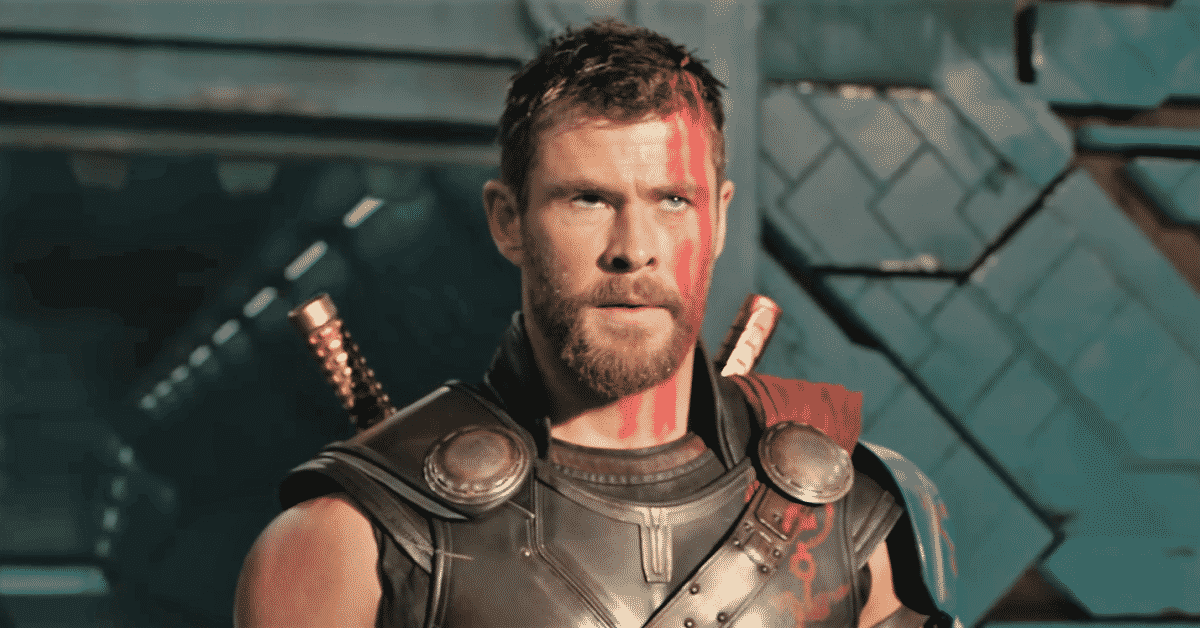
The tragedy of the film is this though, for a film and screenplay that wants to be so focused on place, the film itself doesn't know where it stands. The MCU has been walking a line between having extremely high stakes/somewhat taking itself seriously and going too far. Thor: Ragnarok tries to remedy that by throwing in endless snigger worthy lines, for almost every character in the film - seriously. I think everyone in this movie apart from Blanchett has a joke written for them. Though the director himself pops up as the voice of the irresistibly funny kiwi Korg, the film can't help but feel like a glorified comedy - and yet it tries to maintain these world ending, disaster filled stakes. Unlike The Death of Stalin, Thor 3 does not have a skilled enough director or a well enough established 'universe' for this to make sense. And in the end you just feel a bit meh about the climax. That happened. Okay. Do I really care? Where was the payoff? Without a proper subtext then hero movies will always suffer, and Thor 3 did indeed. Probably worth watching, just don't have any expectations aside a few laughs per page.
The film likes to play with the idea of place, culture and how this affects power, but not in any consistent way. This philosophical underlining of the film goes absent for much of the movie until is is convenient to the plot, when it did have the potential to be really interesting. Instead the film spends much of its time devoting itself to being part of a much larger franchise - building an odd and frankly superficial relationship between Thor and Hulk, as well as the entirely manufactured arc that Valkyrie has. She was afraid of fighting after a military disaster, but now it's okay because she likes fighting again. Also she's friends with Thor now. Why? Don't worry. Instead watch the Hulk fight this enormous CGI wolf, doesn't that look cool?
In truth the visual spectacle of Thor: Ragnarok is immense, and addresses some of the photographical issues I've had with other MCU instalments. The saturation and colours are all a bit drab. Now while this is understandable in a grittier film like the first Ironman or Thor: The Dark World, it's odd that it continued in movies that are chock full of comic book explosive fun, like The Avengers or Captain America. Thor 3 ups the ante and delivers an affair bursting with colour. Asgard looks as immense as ever, though there is one sequence in particular which is so spectacular that I completely disregarded how I felt about the film. The scene in which Valkyrie and her comrades are sent in to attack Cate Blanchett's Hela. It is amazing to see how far film has come, especially since the great leap forward of 3D graphics and effects in James Cameron's 2009 epic Avatar. Now we see a fantasy noble guard fly horses with wings into battle against a goddess with a mean blade. And this doesn't let up, there are plenty of stunning sequences like this throughout the film.
The tragedy of the film is this though, for a film and screenplay that wants to be so focused on place, the film itself doesn't know where it stands. The MCU has been walking a line between having extremely high stakes/somewhat taking itself seriously and going too far. Thor: Ragnarok tries to remedy that by throwing in endless snigger worthy lines, for almost every character in the film - seriously. I think everyone in this movie apart from Blanchett has a joke written for them. Though the director himself pops up as the voice of the irresistibly funny kiwi Korg, the film can't help but feel like a glorified comedy - and yet it tries to maintain these world ending, disaster filled stakes. Unlike The Death of Stalin, Thor 3 does not have a skilled enough director or a well enough established 'universe' for this to make sense. And in the end you just feel a bit meh about the climax. That happened. Okay. Do I really care? Where was the payoff? Without a proper subtext then hero movies will always suffer, and Thor 3 did indeed. Probably worth watching, just don't have any expectations aside a few laughs per page.

No comments:
Post a Comment