Thursday, 23 November 2017

Blade Runner 2049 and Good Time

Blade Runner 2049


½

"And blood-black nothingness began to spin, a system of cells interlinked within cells interlinked within cells interlinked..."

Image result for blade runner 2049

When a great film of days gone by is rebooted, or given a sequel, there is always, and rightfully so, a sense of trepidation. But when one of the best genre films of all time (as well as single-handedly creating its own sub-genre) gets a sequel, the fear of failure is amplified. Blade Runner was a box office flop - taking $33 Million while needing $56 million to break even. Despite this it garnered a cult following for its inventiveness, world building and entirely new take on the sci-fi genre. After 4 different cuts, the last of which was in 2007, there was rarely any talk of a sequel. Nonetheless 25 years later, and approaching the actual year of 2019 in which the first Blade Runner is set, a sequel was greenlit, and found its way to the big screen.

Image result for blade runner 2049

While Blade Runner took a very simple plot (some replicants are here, hunt them down, Deckard.) in a vast and complex world, 2049 goes further, as Officer K (the fantastic Ryan Gosling) discovers something that according to Lt. Joshi (Robin Wright) "Breaks the world". And so he sets off on a vast and expansive mystery and at last we get a feel for the enormousness of what makes up the Blade Runner society. BR2049's world building is spectacular. Entirely confined with dystopian California,  we learn of the events in the 30 years preceding this story, as well as how the country is sustained across its different regions. We travel with K across California and experience the true vastness and implications of the result of the mystery on countless people. By getting a comprehensive look at Blade Runner society in 2049 we learn and become more personal with the stakes of the mystery, as well as learning more about K along the way.

Ryan Gosling delivers yet another standout performance. Fantastic in La La Land, The Big Short, Drive, The Nice Guys, Gosling takes another wicket as the tortured Blade Runner Officer K, and captures your heart through his tragic relatioship with a hologram - Joi. Their struggle together appears unique, and as Joi tells him at one point - special - but K is surrounded by images of the commercialisation of Joi as a hologram, as a product. Gosling's excellence is largely due to his great ability in bringing every corner of his character alive. While he's with Joi you can see his dual torture and acceptance of Joi's lack of physicality.

Image result for blade runner 2049

While Armas (Joi) doesn't have this duality, her descent into desperation is very convincing, especially considering in many of her scenes she won't have been shot opposite Ryan Gosling. Goslings acting also comes alive as we go through the second and third acts, as his character dives deeper into this mystery, where he is stretched to his breaking point. Two standout scenes are the baseline tests, where a rising score, combined with the inflection and vigour of Gosling's voice and piercing stare make for a supremely tense scene.

Elsewhere Harrison Ford looks like he gives a shit for the first time in years. Perhaps he's finally found something he cares about. Deckard returns after going on the run in the time since 2019. The scene in which K and Deckard finally meet is one of the best of the year, set against the orange hue of Blade Runner Las Vegas.

Related image


Director of Photography Roger Deakins absolutely nails this setting, and is the standout of the film. Blade Runner LV is drowned in orange smoke, whilst Los Angeles is a neon dystopia. Every shot is measured, whether flying above the sprawl or confronting a group of savages, BR2049 is a beautifully shot film. Across these three aspects, controlling the sizeable budget against Deakins' lavish cinematography, motivating Harrison Ford to actually work while perfecting Gosling's performance, and top tier world building, makes this Denis Villeneueve's best direction of a project for years. Blade Runner 2049 was such an enormous task, so I believe Villeneueve's direction is better than in that of Arrival or Sicario, even if they are  close to equal as pictures.
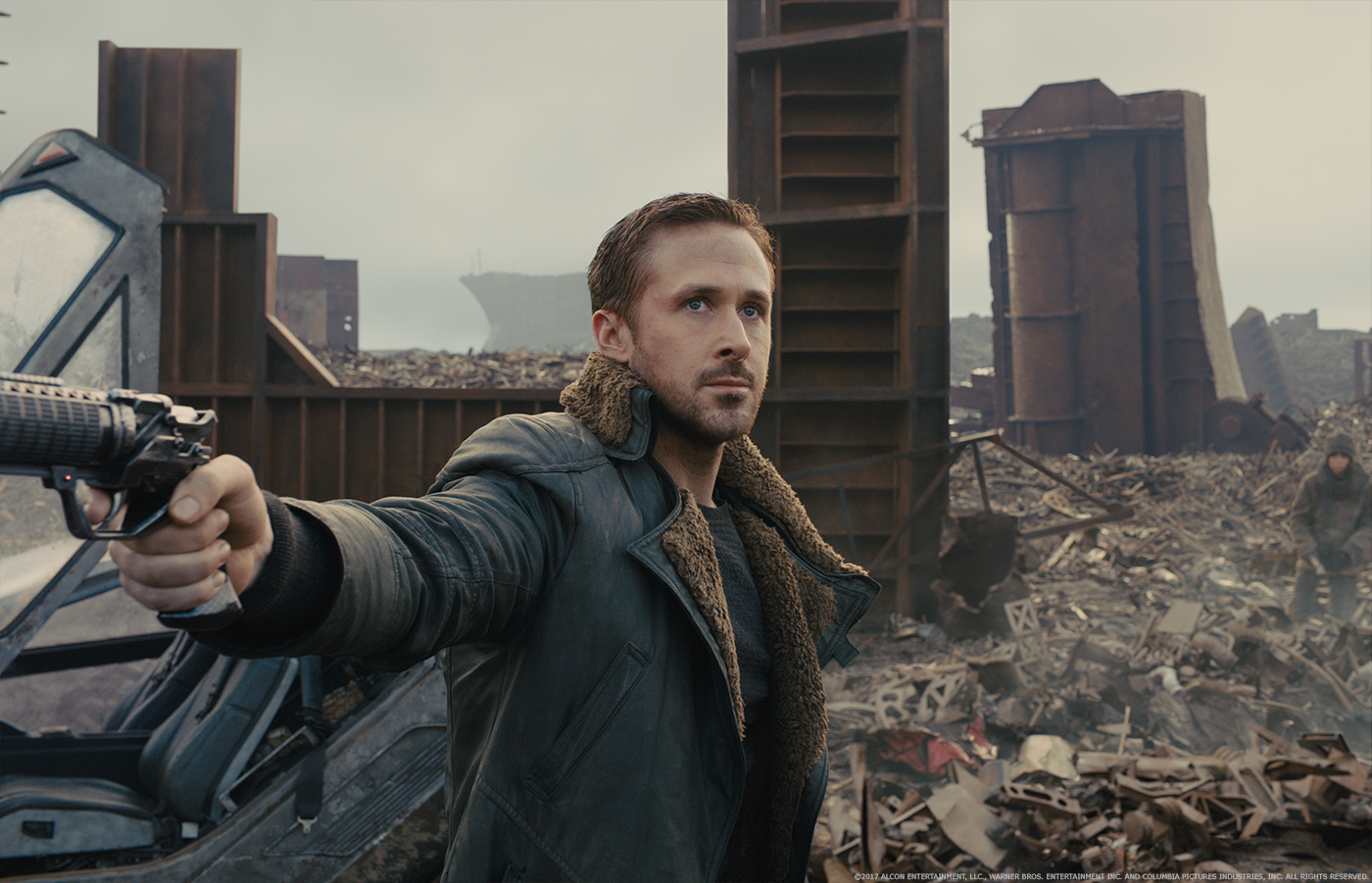
Image result for blade runner 2049 orphanage book trailer

Blade Runner 2049 is everything the sequel to Blade Runner should have been and more. It is a high concept sci-fi study into dystopian commercialisation, the struggle of masculinity and the struggle of femininity, as well as asking that age old Blade Runner question, what does it mean to be human? I'll be doing a proper thematic analysis another time, but for today we can stick with Ridley Scott's vision being continued. Villeneueve has ensured with BR2049 that the Blade Runner legacy will not be lost, like tears in the rain.


Good Time


"Don't be confused it'll just make things harder for me."

Image result for good time


Good Time is a panic attack of a movie, that grabs you by the hair and thrusts you into a frantic scramble as you watch Robert Pattinson sprint the streets of New York, sinking further and further into desperation as he tries to get his brother out of jail by the end of the night. Driven forwards by snappy direction and camera work, Good Time is one of the most thrilling films of the year.

It's a simple film really. We open with a big wide shot of New York City, and this is the director telling you this is where we're going to be, take a good long look at it because this is the last time you'll see it in any positive light. Then a series of events leads to Connie Nikas' (Robert Pattinson) brother Nick get landed in jail. Nick is mentally disabled and Connie is convinced he won't survive in prison, tries to rustle up the bail money. Even in the opening moments of the film it is driven forward by a pulsating techno-synth score, which pounds harder than your heart a the Connie stands in a bank mid-heist.

Image result for good time movie

The direction is also excellent from the Safdie Brothers, of whom, Ben plays Nick Nikas. The camera work is claustrophobic, often coming in for tighter shots, but also dissassociative, as in the final sequence. Rather than slow motion and CGI our expectations of how objects are treated are subverted - what's most important we know anyway, and special attention is given to what is seemingly meaningless. This keeps us on edge, and that score is still pulsing away, with all the synths this side of the Hudson.

Related image

Pattinson is brilliant as he slips further and further into his desperation. You get the sense that this race against time is well and truly on, and as the night continues, his schemes and journey become so twisted and absurd that at times he can't believe what's happening to himself. It's a thoroughly New York film, but not the New York of Hollywood. The glitz and glamour are gone, this isn't Friends. This isn't The Devil Wears Prada or Now You See Me. This is Robert Pattinson tackling a security guard and filling his mouth with hallucinogens. It's got a real sense of place and purpose, in a film filled with characters with no direction at all. It's one of the most intense thrill rides of the year, laced with tragedy and comedy, Good Time was great.

Monday, 20 November 2017

The Beguiled and Justice Snorefest

The Beguiled

½

There are few tales that can be read in such a number of different ways as the plot of The Beguiled. The Don Siegel original, adapted from the 1966 novel A Painted Devil, explored much of the same themes as the 2017 remake. Though it is the enormous amount of different readings that makes a remake completely viable. Sofia Coppola retells the story from a new perspective and engages in questions about gender, power, and sexuality in what I believe to be her best work yet.

Related image

We open following a young girl through the woods, in the midst of the American Civil War. She's singing and picking mushrooms, and everything in the world is right, until she comes across an injured soldier. An injured yankee soldier, who she helps back to her home, an all girls boarding school in the deep south. The soldier enters this sexually repressed world dazed and confused, but soon comes to his senses, with every girl fawning over him. We're introduced to the three principal women - Nicole Kidman as Martha, the Headmistres, regular Coppola collaborator Kristen Dunst as Edwina, and Elle Fanning as Alicia, who each seem to represent women at a different stage of sexual naivety and maturity. Martha is matured, far more experienced than her pupils, though repressed by the expectations of the period. Kidman's performance in this role is magnificent. Every look she makes to the other girls carries with it its own cryptic message, beyond the words she might be speaking at the time, sometimes of instruction, of knowing, or of query.

Meanwhile Kirsten Dunst portrays the wholly naive Edwina, who, alongside most of the girls in the school, falls for the yankee soldier, while Elle Fanning takes on the role of Alicia, who, while young, attempts everything in her power to seduce the soldier. With The Beguiled, Coppola was aiming for a more ambiguous telling of the story, and it wholly hinges on the fabulous Colin Farrell as the yankee soldier, whose performance is contained enough for the first 60 minutes of the film to remain tense and suspensful and wonder just who is doing the beguiling and who is the beguiled. 

Image result for the beguiled 2017


The film takes a sinister turn, and it's in this that we begin to see exactly what Coppola wanted to do with the original material. Yet some of the more interesting parts of the film - what does it mean to be a man and power in relationships are glossed over, instead the film focuses on what it means to be a woman. Sisterhood and childhood are touched on, but the three clashing forces - Martha, Edwina, Alicia struggle to find a synthesis of womanhood that goes beyond relation to the man in the story. Rather than being a powerful narrative that addresses the pros and cons of sisterhood and sexuality, The Beguiled falls flat and is rather an incomplete tale of sexual repression, and then, exorcision. But in this the screenplay only falls short of being outstanding, and is certainly strong enough to stand on its own as a remake and re-reading of a classic story.

Justice League


Production budgets for films have increasingly become irrelevant to the quality of the movie, once you pass a certain point. Reservoir Dogs was shot on a shoestring budget, after Harvey Keitel rustled up some cash for Tarantino to make his feature length debut. Sometimes you get oddball stories about a movie's production budget - like the cocaine budget for The Blues Brothers. Today a small budget film would be a $5 million sum, whilst medium would be 5-50, and large being 50+. Dunkirk was shot on a $100 million budget. I say all this to put the following number into context, because without this context it's just a series of digits and what could have been done with it. The production budget for Justice League was $300 million. And good God did it go to waste.

Image result for justice league

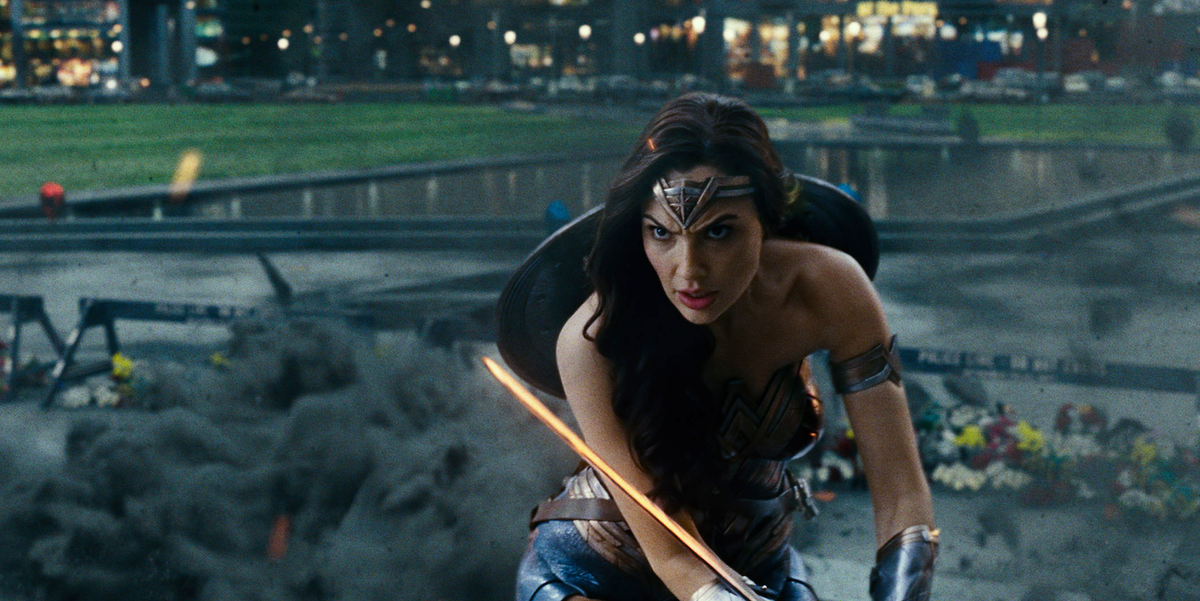
Justice League is a movie about a bunch of faceless people flying into other faceless baddies at incredibly high speeds, and then congratulating itself on what a great action set piece that was with a few quips about something nonsensical. Justice League is so incredibly devoid of character and motivation it could be a Michael Bay film. The latest entry in the DC universe is yards better than Batman v. Superman: Dawn of Justice, mostly because Justice League has a plot.

Cyborg is the black one, Flash is the nerdy awkward but hilarious one and Aquaman is there too. Three central characters are characters only in name, despite having no character to speak of. And no, playing The White Stripes as Jason Momoa takes his shirt off and dives into the water does not count as characterisation in any way. Wonder Woman carries much of the film's emotional heart, and plays off of Ben Affleck's Bruce Wayne/Batman fairly well, who also is treated to some characterisation. Of course these two each have had their own films before, one of which was superb (WW) whilst the other was dreadful (Batman v. Superman). But even so we at least had a sense of this brooding Batman that Batfleck wanted to portray in JL from BvS.

Related image

Here's the rub, Justice League was supposed to be 2 hours and 50 minutes long. Now, this would be far too long for any superhero movie, but by God did Justice League need it. Exposition was deivered at a breakneck pace, to the point where there is a solid 10 minutes of exposition dump. The reason for this is almost certainly the Warner Bros mandate that Justice League be no longer than 2 hours. And clocking in at 1 hour 59 minutes (with a hilariously cut final shot) JL sneaks in under the time limit. Now the issue that arises here is that this is a movie with 5 principal characters and lots of major plot beats, and there is absolutely no breathing space. In fact, during the second act of the film there's possibly the fastest philosophical and metaphysical debate ever taken, concerning raising "someone" from the dead. Suddenly, things just happen in Justice League, and that's what you have to deal with.

Every great hero needs a great villain to fight against. And the CGI tower of doom that is Steppenwolf in JL is a pathetic excuse for anything even considered threatening. He's big and he swings a big weapon around and often proclaims he's a very dangerous person who's going to do some very dangerous things. He is so incredibly unremarkable.

Image result

You have to give credit where it's due though. Zack Snyder sure knows how to shoot an action scene. Though the final battle is transformers-esque in its messiness, lots of other set-pieces are directed excellently, particularly the best scene in the movie, which takes place on Wonder Woman's amazonian island as portrayed in her eponymous film. The amazonians take on Steppenwolf and his faceless army on horseback, and desperately try to keep a macguffin away from the big baddie. It's well show and serves for some riveting action, even if you're  unconvinced by the villain.

Good action and comic relief though simply isn't enough to save a film from itself. They injected some levity into the franchise, but the problem was never the tone, it was the poor storytelling, flat characters and erratic pacing that saw Batman v. Superman fall flat, as well as literally everything going wrong with Suicide Squad. As a result, Justice League is a film grounded in a universe of flat characters, poor storytelling and erratic pacing, and reflects that in itself.

Tuesday, 14 November 2017

The Party, The Death of Stalin, and Thor: Ragnarok

The Party

½
A film that is 71 minutes long has no excuse to be slow to get going, but The Party really does struggle to get its comedic gears turning for the majority of the run time. The social black comedy is about a party for somebody who's just gotten promoted to the Shadow Cabinet for a different type of party, and as the various guests turn up, so do a series of revelations that turns the party into chaos.

Image result for the party movie

The Party has four locations, the main living space, kitchen, bathroom and garden, and as we follow the characters around the house while the party goes on there is a real intimacy of the space you are in. When people move you know where they are going and what that may potentially mean for the plot and for those characters. It is this very physical nature of the movie that is played up for laughs. Cillian Murphy is the jittery, coked-up banker with anger on his mind, while Timothy Spall is still like a statue encased in cement, with the same constant expression on his face, that frankly gets tired after five minutes. In some cases the comedy works, as with Tom (Murphy) or it doesn't, as with Bill (Spall) even though towards the end of the movie the physical comedy plays out very well.

Image result for the party movie sally potter

What Sally Porter apparently failed to realise though is that watching people be awkward isn't very funny. The Party which seemingly relies on its intensely physical and close quarters nature prefers to avoid the physicality, dishing it out sparingly rather than going all out. Now this would have been alright if the dialogue didn't feel so forced. Who are these people who have actual conversations about the development of feminism. One character constantly reminds you she is a realist - not for any character reason of making her appear obnoxious, just because Porter thinks you've already forgotten. An art-house film audience is going to be able to read the subtext, so why does Porter feel the need to bash you over the head with absolutely everything, from the party double entendre to the clunky repetition of plot points, and pseudo political discussion taking place within the party. 

A film with an interesting premise that is executed like the Duke of Monmouth - painfully and slowly. The Party throws a heap at the wall and sees a few fun performances and funny physical moments stick against a black and white subtext and non-existent world building.

The Death of Stalin

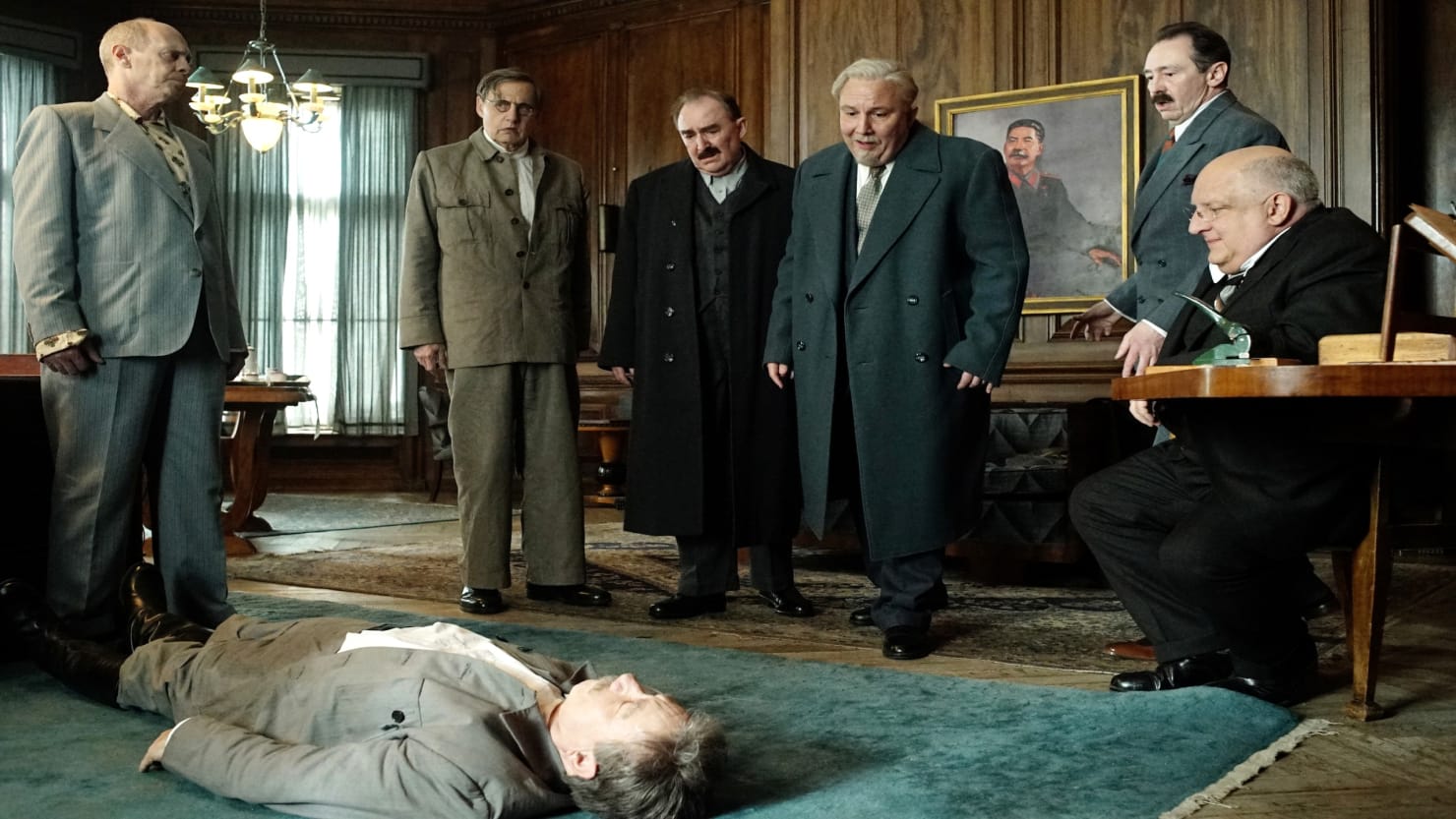
When In The Loop released as the best comedy of 2009, we finally saw Armando Ianucci's long-form debut, after writing and directing three series of the BBC comedy from which In The Loop spun off of - The Thick of It. But this alongside his American TV breakthrough Veep have remained the only projects part of the Ianucci empire. Despite his excellent track record, I waltzed into the 20:30 screening with a sense of trepidation, as it would be the first time Ianucci would be writing and directing an adaptation, from a graphic novel no less. But despite this added challenge, and the darkness of the subject matter, The Death of Stalin strikes a great balance between terror and comedy, more so being the latter.

Image result for the death of stalin

The movie is almost endlessly quotable. Between the personified political bureaucracy and tedium that so often accompanies Ianucci's work in the form of what exactly "all of you" means and the fantastic ensemble of supporting characters, The Death of Stalin is bursting at the seams with laughs. Rupert Friend and Andrea Riseborough play Stalin's son and daughter, whom the politicians are desperate to cater to. Friend is fantastic in his role as the chaotic and uncontrollable son, but with enough nuance in quieter scenes to make the Sverdlovsk plane crash hilarious. (And hello to) Jason Isaacs gloriously plays Georgy Zhukov, the head of the Red Army, bearing seemingly hundreds of medals on his chest and speaking like he's just got off the boat from Hull. The choice to keep accents non-russian only plays up the hilarity and absurdness.

The more overt aspects of Ianucci's directorial style were also more distinctly cinematic. He ditches the handheld cameras used in The Thick of It, Veep and even his other feature, In The Loop. It's a cleaner look that reflects the writer-directors' foray into the world of this wider released picture, much bigger than anything he's done before. Despite this it doesn't lose any of the authenticity or vigour present in his earlier work. The Death of Stalin relies on textbook humour driven by an absurdist plot, and we never lose sight of this in the audience.

Image result for the death of stalin

We watch the story sprawl across Moscow, and the sets have been designed immaculately well. Everything from Stalin's lavish chamber to the dingy back rooms that boast autopsies and executions reflect a looming soviet presence. There are times where you're not sure if what you're watching is a comedy or a tragedy - Molotov's refusal to break the party line being a key part of this. There is no doubt in my mind that this was a hilarious film and anyone else would find it so, but it often strays into a very dark, and towards the end very intense tone. It doesn't feel disjointed as this occurence is constant, but rather makes you as the audience tense up in time with the movie's darker moments, and let go during the hilarity. The climax will leave you crossed between the two.

The Death of Stalin is one of if not the funniest film of the year, and has proven to be moderate box office success. With that out of the way I think we can say hello to Jason Isaacs properly.

Thor: Ragnarok

The third instalment in the Thor franchise and the 17th instalment in the Marvel Cinematic Multi-Comsmoverse comes with the jaunty villain, the witty hero, the witty sidekick, the meta references and oh my God why won't they do something different from the past 16 films. Thor: Ragnarok is such an utterly meh movie but is visually loud enough to keep you interested for around two hours, even if I did fall asleep during the first act. While there is a real hint at story telling beyond the hero saving the day, it struggles to make this vision clear. The film does have a very high laugh ratio, though, and is visually stunning featuring two charismatic leads, and as a result is another respectable entry in the MCU.

Image result for thor ragnarok valkyrie attack

The film likes to play with the idea of place, culture and how this affects power, but not in any consistent way. This philosophical underlining of the film goes absent for much of the movie until is is convenient to the plot, when it did have the potential to be really interesting. Instead the film spends much of its time devoting itself to being part of a much larger franchise - building an odd and frankly superficial relationship between Thor and Hulk, as well as the entirely manufactured arc that Valkyrie has. She was afraid of fighting after a military disaster, but now it's okay because she likes fighting again.  Also she's friends with Thor now. Why? Don't worry. Instead watch the Hulk fight this enormous CGI wolf, doesn't that look cool?

In truth the visual spectacle of Thor: Ragnarok is immense, and addresses some of the photographical issues I've had with other MCU instalments. The saturation and colours are all a bit drab. Now while this is understandable in a grittier film like the first Ironman or Thor: The Dark World, it's odd that it continued in movies that are chock full of comic book explosive fun, like The Avengers or Captain America. Thor 3 ups the ante and delivers an affair bursting with colour. Asgard looks as immense as ever, though there is one sequence in particular which is so spectacular that I completely disregarded how I felt about the film. The scene in which Valkyrie and her comrades are sent in to attack Cate Blanchett's Hela. It is amazing to see how far film has come, especially since the great leap forward of 3D graphics and effects in James Cameron's 2009 epic Avatar. Now we see a fantasy noble guard fly horses with wings into battle against a goddess with a mean blade. And this doesn't let up, there are plenty of stunning sequences like this throughout the film.

Image result for thor ragnarok

The tragedy of the film is this though, for a film and screenplay that wants to be so focused on place, the film itself doesn't know where it stands. The MCU has been walking a line between having extremely high stakes/somewhat taking itself seriously and going too far. Thor: Ragnarok tries to remedy that by throwing in endless snigger worthy lines, for almost every character in the film - seriously. I think everyone in this movie apart from Blanchett has a joke written for them. Though the director himself pops up as the voice of the irresistibly funny kiwi Korg, the film can't help but feel like a glorified comedy - and yet it tries to maintain these world ending, disaster filled stakes. Unlike The Death of Stalin, Thor 3 does not have a skilled enough director or a well enough established 'universe' for this to make sense. And in the end you just feel a bit meh about the climax. That happened. Okay. Do I really care? Where was the payoff? Without a proper subtext then hero movies will always suffer, and Thor 3 did indeed. Probably worth watching, just don't have any expectations aside a few laughs per page.

Thursday, 12 October 2017

Borg vs. McEnroe and Mississippi Grind

Borg vs. McEnroe

In a showdown for the ages, two tennis players who seemingly couldn't be any more different go head to head in a titanic clash in the Wimbledon Final of 1980. On one side is Bjorn Borg (Sverrir Gudnason) a Sweedish 4-time Wimbledon champion, with an ice-cold levelheadedness and bottled up emotion. Opposite him is the rising star and #2 in the world John McEnroe (Shia Labeouf) the fiery and rash 'superbrat' desperate to achieve greatness. But rather than being a film about tennis, it focuses more on the dual lead characters, and each of their conflicts and personal battles, before they battle one another in the climax of the film. 

Before I get into this, I should say that I am totally throwing away any criticisms of accuracy or embellishment. I have no doubt that the story and the events of the movie were embellished, and I don't care. It's a drama that happens to be based on a real life story, and whether or not the characters in this film are true to real life is not relevant to the success or failure of this movie.

Image result for borg vs mcenroe
McEnroe.

Borg vs. McEnroe is at its best when it's exploring the motivations and the emotional distress of the two central characters. While McEnroe has his own personal struggle to become something better and greater than what his reputation has lain upon him, Borg himself is breaking down under his own weight and gravity. It's an interesting look at two people in a deeply competitive setting, and is written quite sharply. The most poignant moments are when we see the two together. The movie puts it off for some time. They meet in the middle, and at the end, much like Pacino and De Niro in Heat, and even if they don't have the best chemistry, it holds up as we have seen them spill out their hearts and souls before us.

Shia LaBeouf doesn't look like John McEnroe at all, but you can certainly draw parallels between the two. Troubled by their antics and past, and searching for something great. It's a shame really that McEnroe's characterisation often comes across as superficial and in-genuine, despite LaBeouf doing a decent job on the screen, the writing isn't there to back up any sincerity.

Image result for borg vs mcenroe
Borg.

Maybe one of the key advantages I had on going into this film was not knowing the result of the Wimbledon final, and as a result, the climactic set piece, the match itself, is riveting and tense as all hell. I had no idea which way it was going to go and I felt sympathies for both of them. Now the problem arises when you do know the result. I have no idea if the last 15 minutes of the movie will be of any interest to someone who knows what happens. The match is shot and cut like an action sequence, but I imagine it would be tiresome when you know how everything is going to go.

Beyond the match itself, the exploration of each player's dynamic isn't sufficient to call it a proper biopic, rather it's more of a story about greatness and how to handle your inner demons. Despite this, not much is actually said. Each of their character arcs is State A to State B, we don't actually get a 'journey' so to speak. In fact, their flashpoint is that they play tennis. Now, this should be expected, since it's a movie about tennis, technically, but to rely on it so heavily as a device for both the plot and subtext moves from 'Tennis' from premise to crutch in Borg vs. McEnroe.

Image result for borg vs mcenroe
McEnroe - Borg

Nonetheless, they make an interesting transition, and along with some solid performances from Gudnanson and LaBeouf (one less expected than the other) and some smart jukebox picks (Call Me, The Big Beat) Borg vs. McEnroe becomes something that is, mostly, entertaining and towards the end, rather gripping, if you don't know what happens, that is.

Mississippi Grind

½

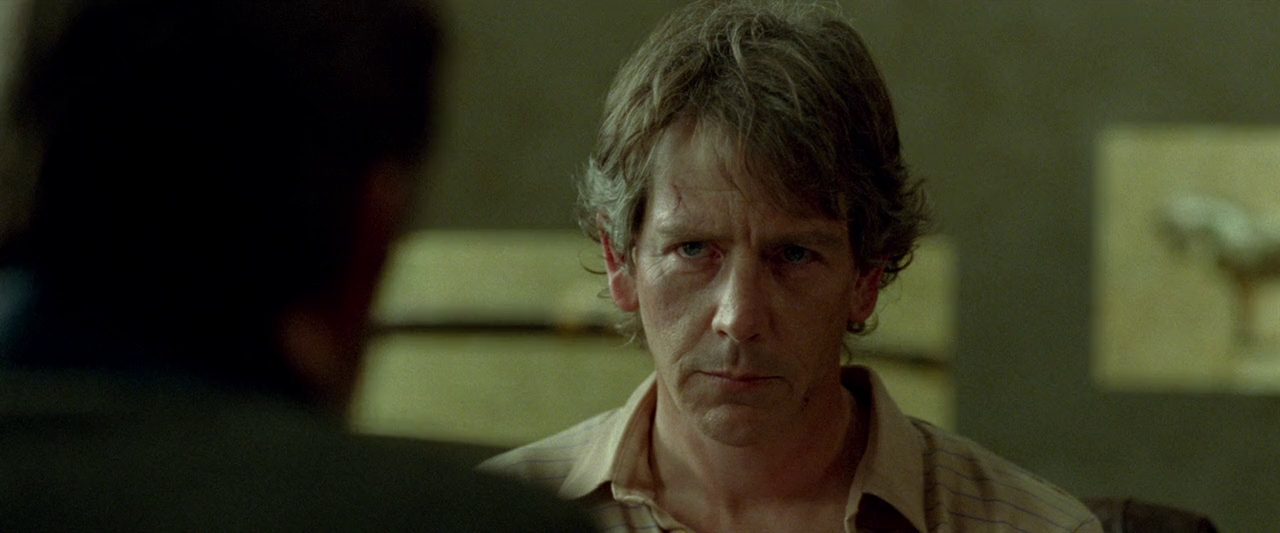
Ben Mendlesohn and Ryan Reynolds bounce off each other absolutely flawlessly in the former's best turn for decades, and the latter's best performance ever. Mississipi Grind follows two hopelessly flawed gamblers as they journey down the Mississippi River ("like Huck fuckin' Finn and Jim" as Reynolds' character expertly notes) through the dingy and depressing world of backroom poker. It's an expertly written, acted, directed and produced road movie that is horribly marred by one of the worst endings I have ever seen.

Image result for mississippi grind
Mendlesohn's back.

The chemistry between Mendlesohn and Reynolds is absolutely off the charts. In everything they do they develop this platonic relationship that is comradely and romantic. Even through the lower points in their relationship there is a very real and convincing dynamic between the two and their respective problems. Mendlesohn plays Gerry, a man who owes a lot of money to a lot of people, while Reynolds plays Curtis, someone who maintains a facade of control about his life, but is trapped by vices just like Gerry. As a result we see the duo's relationship always hinging on their vices. It creates sympathies for these characters - more so for the increasingly unlikable Gerry, but Mendlesohn plays the sheepish and desperate role to perfection. More so, their relationship creates tension, as the road ahead starts to run out, and their gambling continues, the audience is locked into the road trip with our two (anti) heroes.

Mississippi Grind offers an interesting exploration of camaraderie and loyalty, and these themes are developed subtly and in a funny and interesting way for 90% of the movie. Curtis catches on to Gerry almost immediately - asking "how much money do you owe?" almost as quickly as Gerry latches on to him. Gerry sees Curtis as his lucky charm, everything is at peace and at one when Curtis is near, but most importantly for Gerry, when Curtis is near, he wins. As we continue through the story we see Curtis almost facilitating Gerry's addiction, and depending on how you see it their friendship can be seen in a few ways. Curtis could have some form of saviour complex and be exploiting Gerry, Gerry could be exploiting Curtis' good nature, or, and this was my interpretation, we're watching two deeply co-dependent people trying to overcome their vices. And for 95 minutes this film is a brilliant study into such a difficult and strained topic.

"Like Huck fuckin' Finn"...


But the last 10 minutes are absolutely shocking. The film betrays itself. Rather than having the balls to go through with its message, or actually find a suitable resolution for the type of ending the writer was going for, we get the equivalent of a microwaved frankfurter in our gourmet sesame seed bun. Rather than figuring out how our characters can actually overcome their vices, or potentially just leaving it open ended, not showing their redemption or any glimmer of hope, the film loads up the cheese and propels it onto the silver screen.
The following contains spoilers for the end of the movie. I would actually really recommend this film, even though the ending kills me inside, so if you haven't seen it I'd advise you don't read on.


Image result for mississippi grind
A day at the races.
They 'overcome' their issues by winning. By gambling, and suddenly they're quite successful. What a great ending eh. Turns out it was a gambling movie after all! Not a deep and intense character/relationship study. No. Rather it's a film about luck and the glamour of gambling - which totally betrays the rest of the movie. It's a shame such a Hollywood ending was written into a film with a production budget of less than a $500,000, but there's no changing it now.

Tuesday, 26 September 2017

Kingsman: The Golden Circle


Kingsman: The Secret Service brought a breath of fresh air to what was rapidly becoming a genre that was taking itself too seriously. With Skyfall, the Total Recall reboot and The Bourne Legacy all releasing in 2012, the genre was desperate for something fresh and novel. Kingsman provided exactly that, a film that was silly for the sake of being silly, but still created genuine emotional moments in this silly setting in the vein of Groundhog Day or Toy Story. Kingsman: The Golden Circle appears to begin in the same way. A smartly shot action sequence followed by a sweet moment of heart in the movie, but by the time that you reach the end of this 140 minute slog, you feel it was artificial and soulless, because that's what the rest of this movie was. 

Image result for kingsman the golden circle

Rather than trying to be its own movie, like its predecessor, The Golden Circle is a sequel that has forgotten where it came from. There are over a dozen call-backs to the first movie - that's one every 10 minutes, and none of them are justified, apart from maybe one because it's central to the plot. It's jarring and it doesn't make any sense unless you've seen the first movie and yes I know it's a sequel but the jokes are done so awkwardly and were clearly forced in to the script like a slug through a keyhole.

Another enormous problem with the movie is the return of Colin Firth. Now, I have no problem with Colin Firth, I think he's wonderful in the first film, he's ok in this second instalment, but his return makes nothing mean anything anymore. Maybe a slight plot spoiler is that Colin Firth returns at all, he was very clearly dead in Kingsman 1, but no he's back and it's because of some cool technology that repairs people's brains, cause that's where he got shot. Halle Berry (nothing more than a shit version of Simon Pegg in Mission Impossible 3) quickly applies the magical healing substance and hey presto King George lives on! The issue with this is that now I don't care if anyone is in danger, they'll just be brought back. In fact, (plot spoilers ahead) this magic stuff even brings back to life ANOTHER person, thus diminishing the tension even more.

Image result for kingsman 2

This plot device was excused by the co-writer and director Matthew Vaughn as the best parts of Kingsman 1 was the relationship and heartfelt moments between Harry and Eggsy (Firth and Egerton). But instead of putting in some effort and trying to recreate this dynamic with characters who are still alive, perhaps Merlin or Roxy who were excellent characters in the last film, the writers just threw Firth back in.

The irony is that the device instead of improving the emotional quality of the film completely undermines it, because there is no more investment in these characters. When they are in peril you can't help but think that it doesn't matter what happens, they'll be back in Kingsman 3 (which will undoubtedly happen). Even an incredibly emotional moment late in the film is punctured by this, and although I was sad I couldn't help but remember the stupid thing that brought back Colin Firth's character.

Image result for kingsman 2 julianne moore

The bizzare inclusion of Elton John is also amiss with me. I have no idea why he is in this movie beyond the first scene. The cameo was fun and was what Kingsman was all about, but using someone who is very clearly not a good actor as an actual plot device is beyond ridiculous to me. Julianne Moore doesn't do anything in this film. She just sort of sits there being creepily kind and evil at the same time. She is fun as a villain in the same way Sam Jackson was a fun villain in the first film but I just wish she had more to do.

The statesmen are fun for 10 minutes. It's bizzare to me that they introduce the one who will be the least developed of the statesmen first. The statesmen also prove to be a horrific waste of Jeff Bridges whose character was also almost entirely yawn-inducing. I think he genuinely has less than 3 minutes of screen time. The novelty of the statesmen lasts all of around 10 minutes before we realise that they aren't going to be doing anything of substance.

Image result for kingsman 2

Kingsman 1 was also weirdly and quietly subversive. It deliberately went out of its way to subvert the audience's expectations of a spy caper. The line "This ain't that kinda movie" is regularly and well used. But make no mistake, Kingsman 2 very much is that kind of movie. Even the first's subversion of sex and gender in the spy genre was betrayed in The Golden Circle. The "bum note" in the original has a case for playing with audience expectations for a spy movie. The Glastonbury sequence in this sequel is, quite simply, ridiculous, and stinks of a filmmaker that has simply out of ideas.

The film does have some merit to it. In all fairness the action scenes are incredibly well done. They are shot in such a way that is reminiscent of stop motion, and almost looks unreal. This of course plays to the wider themes in Kingsman: The Golden Circle of a bizzaro and subversive version of the spy caper, yet this subversiveness is lost elsewhere, rather, the movie provides us with a by-the-numbers phoned in sequel, which will almost certainly make enormous amounts of money. It's good to see Channing Tatum in an enjoyable role, and Colin Firth alongside Taron Egerton do a good job as the leads, even if it makes little sense.

You might have fun, if you go and see The Golden Circle. It attempts to hide its formulaic and lazy nature with a facade of self-awareness and subversion, which has simply gone absent from the script. Holes are filled with flashy action, a bulging cast, and a sense of humour which resembles that of a nine year old relative who made you laugh once with a silly joke, so repeats it again and again, with slight, non-variations. Forcing its brilliant jokes upon you, because it's clearly the Groundhog Day of 2017, Kingsman: The Golden Circle is a farce of a movie.

Saturday, 16 September 2017

Broken and Detroit - Lessons from the screenplay

Broken - agile drama pulling its punches


Everyone who grew up in Britain will be familiar with the fundamentals of the British soap opera. Eastenders, Coronation Street, Hollyoaks and more, set the scene for dozens of iconic characters through the 80s, 90s and in the 21st century. Broken takes the themes and ideas of these quintessentially British shows, and turns it into a feature length drama that tends to focus on the less dramatic. The movie is about three households who live in close proximity to each other, in a cul-de-sac, and the events that develop across the three families. Their stories are interwoven and part of one 90 minute picture in the shape of Broken.


Broken could be considered a very British Pulp Fiction. It has an interwoven story told from multiple perspectives if in chronological order, with smart and snappy dialogue, and Tim Roth to boot. But other than that, some great performances and memorable 'moments'. There is not much to Broken.

Make no mistake, the novelty of the interwoven story across these three, quite tragically different families lasts the full ninety minutes, and you have great moments of overlap and divergence. The film's real lead is the 11 year old Elouise Lawrence, who put on a break out peformance, if of course she had broken out. She was credited in only one film after Broken, unfortunately, the director's second project, London Town. Despite this she leads the movie like she had been playing a leading lady for years. Her character is nicknamed Skunk, and has a sort of unabashed confidence alongside a very real fear of what is ultimately the real world, rather than the child's world that she is on the edge of. As the movie progresses we see Skunk's coming-of-age journey begin to tear her apart. Alongside Lawrence is the always reliable Tim Roth, as well as the interjection of elegance that is Cillian Murphy. Each play characters in one of thee troubles households, and their frosty dynamic elevates the film often.

It elevates the film because it was so simple. It wasn't dramatic and it wasn't over the top, and it certainly wasn't Eastenders. Rather it was just two blokes who weren't quite sure of one another, until, they do become sure of one another. Despite this coming-of-age story with Skunk and interesting character dynamics in one of the households, the film uses melodrama as a crutch. There are moments when you think that you are watching a bog-standard British soap opera with some better writing and acting, but no, instead you are watching a feature length one that is especially harrowing. But it's harrowing only in the moment of harrow. There were far too many completely unearned payoffs and totally unearned redemption that just served the plot. For no reason. And thinking back it stinks of bad bad writing. A ninety minute picture could well have been longer, rather than the half baked version of the film that we got.


I'm fine with melodrama, many times in Broken it is actually used well and effectively. But the plot devices disguised as character development which make no sense in the grand scheme of things are an absolute slap in the face to the audience. In the end Broken will go down as another British indie film that should have been better, rather than the horrific family drama that it purports to be.

Detroit - horrific drama delivered brutally

Focusing on the events that took place in the Algiers Motel during the Detroit riots in 1967, Katherine Bigelow and Mark Boal (direction and writing respectively for both Hurt Locker and Zero Dark Thirty) craft an incredibly intense and horrific cinematic experience. We begin following different people in the city of Detroit, Michigan once the riots begin, and their stories all convene in the Algiers Motel, where Detroit Police, Michigan State Police and the National Guard suspect one of a handful of snipers still active in the city is camped.


The film devotes its first act to establishing and bringing together the key players in the showdown at the Algiers. There’s John Boyega as Dismukes – a well-intentioned security guard who acts as the go-between for the authorities and the civilians. Will Poulter as Officer Krauss, a deeply hateful police officer living behind a thin veil of innocence, and Algee Smith as Larry Reid, a hopeful singer. Both Poulter and Smith are phenomenal. Poulter so fantastically embodies the hatred and racism running through the veins of Krauss, but maintains the deliberate and obvious façade of innocence that exists in the institutional racism of the police force, particularly in 1967 but remains today. In this Poulter expertly portrays Krauss as what he is meant to be - Fundamentally evil, yet with enough self-importance and belief that he is doing the right thing, despite being self-aware enough to recognise the monster he is. Poulter is simply fantastic, and I wouldn’t be surprised if he gets a Supporting Actor nomination. The same is true of Algee Smith. Larry Reid is a beautifully characterised and developed person – representing all the hope and style, but also the struggle coursing through black America after the Second World War. And Algee shows just how much an actor can bring to a role, doing a fantastic job at filling this complex and changing character.

Detroit creates a real sense of horror through the second act, once the principal characters are gathered in the Algiers. In fact our frame of reference becomes smaller and smaller as the hotel is raided. We go from the whole hotel being under siege to Krauss and co holding the guests hostage in just a single hallway. In this second act the tone of the film switches to being one of full-on horror. We watch on knowing there’s nothing we can do, and we see every slim chance at hope for the hostages slipping away. This claustrophobic setting and continual reminder that these people are completely at the mercy of the Detroit PD drives home the horror of the second act, and plays on our natural human fears.

The film is properly visceral, from beginning to end, exploring this key theme of justice. Although this is somewhat paused for the centre-piece of the movie, this exploration of justice is maintained from the beginning, and through to the very end of the film. From the inciting moments of the riot, you as the audience are forced to question everything you see on screen. Who is in the right here? Is this action just? But as you progress further and further into the film the sides become far less blurred. This continues through the movie as you dive deeper and deeper into events that fly in the face of any kind of justice, all the way to the ending.


Of course Detroit is particularly timely considering the alarmingly high proportions of black people killed in the line of duty in the USA, and will serve as a reminder that racism was a major factor in police work much further back than the 21st century. Detroit also takes an interesting perspective on the ‘bad apples’ argument. Racist police officers are sometimes accused of being bad apples in a bunch. In Detroit this certainly seems to be the case, where Krauss and Flynn (Ben O’Toole) appear to be the only officers in the film who are actively and aggressively racist, as well as to some extent Demens (the superb Jack Reynor). Yet the state police and National Guardsman are bystanders to the police brutality. The Detroit PD are facilitated in their brutality by those around them, showing that even if there are only a few bad apples, plenty could and should be done to stop them.

The film is certainly a unique experience. Somewhere between a drama and a straight up horror film, Detroit paints a terrifying picture of police brutality and the course of justice. It’s not something I’d watch often, but perhaps every once in a while. Although it is maybe a little too long, Detroit is a haunting movie that carries its very heavy themes and action with superb performances – Poulter and Smith in particular.

Thursday, 14 September 2017

Trainspotting and Wind River - subtext galore

Trainspotting - ★★★★½                                                                                


Trainspotting is a fantastic and deeply philosophical exploration of addiction. We meet a group of friends, veterans of the Edinburgh heroin scene, and follow Renton (Ewan McGregor) through his (hilarious) journey, falling off or getting back on the wagon.  We watch as Danny Boyle leads us through this turbulent world, filled with the least charming people you will ever meet that you come to sympathise with and be hopeful for, against the harsh backdrop of looming heroin addiction.

Image result for trainspotting

One of the best things about Trainspotting is how off-kilter it is on just about everything. The movie is hilarious while maintaining that these are serious events happening to real people. Not only this, its depiction of addiction is particularly off-kilter. In Trainspotting, it is made clear the joy and ecstacy that a drug addict feels when they’re in the warm embrace of a high, but it is also made clear the devastating lows that occur both before achieving a high, and after coming down from one. Perhaps what illustrates this most brilliantly is the now famous toilet scene. Once inside the toilet, Renton is free, at last emerging from the disgusting world he resides in when sober. But he once again emerges and wallows in the filth of the worst toilet in Edinburgh. 

Furthermore, even the characters in the movie are off-kilter, as you begin to really sympathise with this group, despite their obvious pitfalls. Spud is a stupid, naïve and nervous wreck when it comes to most walks of life, and heroin has simply become part of his life. Sick Boy is an obsessive co-dependent ‘non-addicted’ addict, while Begbie is a psychopathic, alcoholic hard man who stays away from heroin.

Danny Boyle provides some of the best directing I have seen in Trainspotting. There are over a dozen scenes in this movie where you can sit back and allow Danny to show you the world like you have never seen it. From a job interview while high, to a tortuous withdrawal from heroin, every shot makes sense and drags you further into this very specific world of addiction. The same can be said in the unexpectedly few scenes that portray drug use. When Renton shoots up some heroin, Boyle directs the scene like the characters are performing a stage play. The dealer and the buyer seem to be performing in front of each other, as if they were not aware of the nasty nature of their business with each other. And of course what adds another layer is that this dance is really, really funny. And despite the events afterwards, the jukebox choices and the POV shots from Renton makes sure the laughter continues, despite the horror of what is being depicted on screen.

Image result for trainspotting

Trainspotting functions as a movie not only about Renton’s journey, but also about addiction as a whole. Not just heroin addiction too. Alcohol addiction is touched upon, sex addiction is the subject of a few major sequences. Even Sick Boy’s obsession with James Bond could be considered an addiction, as well as Renton’s need to stick with his friends, despite knowing that they’re not really his friends, just people he does heroin with. 

He even speaks about this friendship as a high, at one point, before you come down and realise how shit life is living with this addiction. With this portrayal of what exactly camaraderie is, combined with the very grey-area portrayal of heroin addiction, the movie seems to be asking the audience a very difficult question throughout the movie. What does it mean to be addicted? Is it a bad thing? Is it a key function in our lives as humans?  Should you be addicted to some things but not others? In the end Renton appears to be addicted to life, which is perhaps the most reasonable answer to any question over what exactly addiction is.

So as a result Trainspotting only  gets better the more you watch it, and the more you take in these ideas over how you should feel and why you should feel that way over heroin, alcohol, money, and life in general. In 1996 Danny Boyle broke out with this film, becoming a visionary British filmmaker in the process, and deservedly so for a film as complete as Trainspotting. It means to spend an awful amount of time and effort doing something menial and in the end, doesn’t really matter – Trainspotting – and perhaps that is the best way of explaining what exactly addiction is. The second best way, would be to watch Danny Boyle’s film of the same name.


Wind River - ★★★½

More mystery than thriller, Wind River takes place in a remote Native American reservation in Wyoming, where a dead body has been found by the local game hunter Cory Lambert (Jeremy Renner), who seems to have vengeance on his mind. Accompanying him is FBI Agent Jane (Elizabeth Olsen) – a fish out of water who has to combat the psyche of the Wind River reservation whilst being determined to track down the killer.

Image result for wind river movie

The best thing Wind River has going for it is the hazardous and hostile environment of this part of Wyoming. You can really feel the enormous scale of the reservation and just how alone our heroes are in their hunt for the killer. The film plays on this idea of loneliness and how this fear of being alone drives us to our limits. We see this in Jane, the FBI agent, who is clearly out of her depth, and needs help navigating the reservation and its culture. We also see this in Renner’s character, separated from his wife, lost his child, and now spends his days alone in the wilderness, trying to do some good. All the way down to the details of the mystery this theme of being alone in the wild is maintained. The body was found over 5 miles from the nearest structure, with evidence of rape and battery
.
You get plenty of western vibes as you continue through the story, from the Stetson wearing Lambert to the vast apparent lawlessness on the Wind River reservation. And as we watch them trek through this mystery that Jane is insistent upon being a homicide, they each go on their own journeys - Lambert seeking some sort of closure, whilst Olsen needs to find herself in the most challenging environment possible. The film likes to really ram that home too. The characters may as well have been saying “Hey by the way, we’re in Wyoming, Jane.” “Did you know we’re in Wyoming?” Whilst being ham-fisted in this way, it all serves the subtext of having to stand as your own person out in Wyoming, unlike in Las Vegas, where Jane was based.

Image result for wind river movie

Despite so much going on, the film suffers from some pretty major pacing issues. It starts slow, then gets slower, and at seemingly random points throws your right into an ultra-tense showdown. My point is, that there’s no payoff in the first two acts, because of this shoddy pacing, despite it being suspenseful and mysterious. There is no build-up the big scenes. It goes from a leisurely walk through the Wyoming wild to a cross-country sprint in the blink of an eye. It all feels a little rushed until you realise just how long the slower segments are. Despite this the third act is absolutely nailed. A brilliant build-up of tension and the unravelling of the mystery will leave you agape.

For the third act alone I would recommend anyone to go and see this movie. It is mysterious, if poorly paced, and more parts mystery than thriller. With a great subtext about Wyoming and centring around Jane and Lambert’s personal journeys the film is a success as a low-budget mystery, even though it could have been so much better with the pacing of the screenwriter’s previous work, like Sicario or Hell or High Water. 

Saturday, 9 September 2017

Manchester by the Sea and The Grand Budapest Hotel

Manchester by the Sea – Tragedy in Boston                                                ★★★★
Manchester by the Sea is a film that has to be felt more than to be watched. This is its greatest success and its greatest failure all at the same time. It's a film about grief, and follows Lee Chandler (Casey Affleck) as he struggles to cope.
Image result

The fact about this movie is that the plot is paper thin, and it had to be for it to work. Rather it is a deep and intense character study of Lee, and to some extent the his nephew Patrick (Lucas Hedges). We see them handle their griefs distinctly and in both very similar and very different ways. Again this duality appears, I believe that it is at least in part because, the movie is trying to highlight the extreme complexity of human character, even more so in a time of grief. The duality goes further, not only are their griefs similar and different, their relationship is one born out of love and disaster. As humans we can love someone and hate someone at the same time, and Manchester by the Sea exhibits this very well.
The film goes even further to take a snapshot of the human condition through its use of incredibly black hole dark humour. At one point, during a sad moment, Lee delivers an unintentionally (for the character, not the script) hilarious line, but it is done in such a way that it doesn't break the tension or the tone of the scene. Rather it makes you the audience feel bad for laughing, because we all know these moments. These moments of awkwardness that creep into surreal and life changing moments really do happen, especially so during times of grief. Now the film also takes the decision to portray life in a hyper-realistic sense. People trip up over their words, people forget where they park the car and of course moments of awkwardness are interjected at times they come up before. Manchester by the Sea does all this easily, to heighten the humanity of the situation, and of course, the ever present grief.
Casey Affleck puts on an absolute clinic in subtle acting. To say he portrayed a man devoured by grief would be an under-statement. Every time you look at him in this film you can feel the sadness, the horror and yes, the grief, in his eyes. Despite this he is at his best when Michelle Williams is present. Towards the end of the film the two have an incredibly horrifying and heart-wrenching scene together, and you can hear every ounce of tragedy in their voices. They spill their guts out to each other in the second worst way possible (the first being in the literal sense) and every single line is delivered superbly particularly by Affleck. His intonation shifts around but hits the right notes every time, and is a credit to his performance in the movie.
Manchester by the Sea simply envelopes you in grief. You can truly feel it with every moment on screen. Perhaps it is something in the direction that gives it this feel, but part of it can certainly be attributed to the town itself. It is bleak, and lacks colour, and the isolation of this town, in part by the coastline, but also that Lee simply cannot leave reflects his struggle to escape his grief. Watching the film grief envelopes you in the same way that the town envelopes Lee.
Related image
It is at this point I credit the screenwriter, also director, Kenneth Lonargen, for producing a screenplay so incredibly down to earth and realistic. However, a major problem comes with creating a film like Manchester by the Sea, especially a character study. The ever present sword suspended over the film - it being boring. And I sympathise with people who found Manchester by the Sea boring. The plot is basically non-existent after the first 20 minutes, and Lonargen ultimately fails to keep up the pace of this movie which is ultimately about a quite abstract concept - grief and the human condition. To say nothing much happens wouldn't be accurate, but is a fair criticism for a movie like this. In this it a film to feel rather than to watch. By this I mean it is something to take in and experience, to feel Lee and Patrick's grief and all the different emotions going on in their head and to feel them, rather than watch them. Because they're not going anywhere - Manchester by the Sea isn't a fairy tale adventure, it's real life.
But it is because of this that I only give it a 4 out of 5.
A harrowing look into deeply complex human emotions and deeply complex human character that transforms the cinematic experience, for better or for worse, to an incredibly realistic degree. With a plethora of clever cinematic devices, and stunning depiction of casual life, it certainly deserves to be seen by as wide an audience as possible. Despite this, the movie struggles to get much done on its thin plot, despite running for over 130 minutes. At times I was bored by the movie, and at times it certainly felt like nothing was happening. It is not a satisfying movie, and nor should it be, but this doesn’t work across the whole run-time. Nonetheless the film was one of the best of 2016 for its remarkable portrayal of human suffering. It isn’t pretty, or fun, but is one of the best tragedies in recent years.
The Grand Budapest Hotel – A rip-roaring ride from days gone by    ★★★½
GBH is the type of film that you watch and smile in almost unconscious glee throughout. It is an adventure movie that is delightfully funny, filled with characters as colourful as the scenery. The use of multi-layered storytelling, though seemingly superficial at first, actually strikes a quite emotional chord and helps the extravagant world building that takes place around this place called the Grand Budapest Hotel. This superficiality is only emphasised by the incredibly bright colour scheme used, which is not often seen in movies. Despite this while GBH hits all the sweet spots an adventure-comedy should, it is seemingly superficial and I struggle to see there being much more to it than its surface.
Image result
As you can tell from simply looking at any image from the film or even the poster, the most striking immediate thing about the movie is its incredibly vivid use of colour. Now films tend to alter which colours are more prominent than others, grading and scaling the palette to the cinematographer and director’s will. GBH uses the full spectrum in all its glory. Even the scenes featuring Edward Norton’s army, whose uniforms are all very dark, the surroundings still appear bright and colourful, in stark contrast to the army.
Nonetheless, it’s not all about the aesthetics of GBH. In fact we’re led through a surreal and exciting plot, going from the hotel itself to the frontline of a warzone, a bakery, a mountain peak, a prison, and all as part of this great adventure that you become genuinely invested into. The adventure is executed so well that by the end of it all you feel like you’ve been on the journey with these characters, and in turn gotten to know them as well as they’ve gotten to know each other. To be able to create such a great adventure is almost entirely reliant on the top-notch screenplay by Wes Andersen himself, who even inserts a joke about how convoluted the whole story is. But despite this seeming moment of self-awareness, the fact is that the story has been constructed so well that the audience know exactly what is going on and are not confused by the plot whatsoever. It is great screenwriting that holds the film together.
The story also works so well as a rollercoaster ride because of the characters you meet and get to know. Primarily Ralph Fiennes work as Gustave H was exceptional. Playing a posh hotel concierge with an eye for detail and even sharper eye for discipline, he excels in playing a character that changes internally vastly over the course of the adventure whilst the character attempts to maintain their proper nature. A few characters have distinctive arcs that we watch develop through a very personal lense and having accompanied the two leads on their journey you do really feel a passenger on Wes Anderson’s wild ride, accompanied by a concierge and lobby boy.


Image result for grand budapest hotel
The issue is, in my opinion, that there is really not much going on other than that exciting story and engaging characters. Now while many many people may enjoy an adventure flick more than any other type of film and thus adore GBH, that’s just not for me. I need there to be more than this in a movie for me to truly love it. It was certainly a strong and entertaining picture but from my subjective point of view, there needs to be more substance, despite the impeccable style.
So I’ll leave this delightful picture with three and a half, because of the incredible fun that’s to be had in watching it. It’s definitely a film to watch with others and is a shining example of a movie that is good fun but doesn’t have to be a summer blockbuster or superhero flick a-la Kong: Skull Island. Although it wasn’t entirely pleasing for me, its writing is superb and takes the adventure genre to new heights in the same way Raiders of the Lost Ark did over 30 years ago. 

Wednesday, 6 September 2017

Kong: Skull Island and Private Benjamin - Untapped potential

Kong: Skull Island


When writers, directors, producers and the rest of the Hollywood machine set out to create a film that transcends genre, sometimes you get a genre-bending classic in the vein of Ben Wheatley's Kill List, or perhaps something more Hollywood, in the form of Vanilla Sky or even Ghostbusters. Though the other times, you end up with a hot mess, like Kong: Skull Island. What does this movie want to be is a question you are asking yourself throughout the 2 hour running time, and you won't have an answer long after the cash-grabbing post credits scene.
Related image
Kong is more than a by-the-numbers action movie. In fact, the screenwriters seem to completely replace character development with humour. As a result the movie, seemingly randomly, becomes an action-comedy. This leads to a lack of character and payoff which I'll touch on later, but the core structure of this movie is only halfway explained. Because not only is this an action film sometimes action-comedy, it's a Vietnam film. That's right. And if you're wondering how you fit Apocalypse Now into the action-comedy genre, here's the answer - you don't. Instead Kong takes the approach of a middle aged American southerner who yearns for the good old days of Jim Crow and cold beer. It's some weird pastiche of the Vietnam era that is heavily romanticised and referenced to.
Oh and also it's a King Kong movie. King Kong turns up and kicks some butt around once every twenty minutes. Now with a better screenplay, this movie may have worked out to be something coherent, and genre bending, rather than genre skipping. Sadly it turns out to be the latter.
One of the biggest problems with the screenplay is the odd direction it takes to character. It's emphasis on comedy means that there is no time for anything resembling a character arc. Perhaps the closest we get is Brie Larson's relationship with Kong himself, although that is simply lifted from every King Kong story ever made. Sam Jackson plays a derivative version of Captain Willard,There are over a dozen characters in this film. There are 5 principle characters, as well as 8 supporting characters, not to mention Kong himself. This bloats the film and gives no time for any development of Sam Jackson or anyone else's arc.
There is a scene near the start of the movie, where Brie Larson and Sam Jackson have a brief quip-off about the Vietnam War. A conflict is set up, and this is NEVER touched on again. Not once. This is what happens when a film is as convoluted and bloated as Kong after having too much octopus for lunch.
That's not to say that the cast puts on a poor performance though. The 5 central performances (Hiddlestone, Larson, Jackson, Goodman, Reilly) are all as good as they can be. Hiddlestone is great as the genric action hero, but that's all he can really do and be in this movie. Larson is a little more developed, the (anti-) war photographer damsel in distress maintains a good delivery and comic timing in the first Reilly scene. Despite this her character is pushed into the damsel role perhaps a little too heavily, although a feminist case can be made for Larson's character's role in this movie. Reilly is the shining star though, his antics are so absurd they fit into the melting pot the movie is. His delivery is on point with every joke and keeps the film alive into the third act.


Image result for kong skull island sun
But going back to the nostalgia filled dutch angle take on the cinematic Vietnam genre, we have to see that there is nothing inherently wrong with this. In fact the screenwriters have clearly adapted the genre to fit the style of the film. Not successfully, but it works in a few key ways. The first being the cinematography. Larry Fong perfectly captures a nostalgic image of the Vietnam film in nearly every single shot. The iconic Apocalypse Now sunset is used often and rightfully so, with primary colours of orange, yellow and blue bathing the greens of the island. As a result the movie certainly looks very Platoon, and keeps up with it in simple plot devices.
In the case of Kong: Skull Island, the Vietnam feel is developed even more, but in fun and inclusive ways for the audience to enjoy. Blasting Black Sabbath out of a helicopter as they begin an attack, or having to take a boat up a river to get to their destination, they capitalise on what the genre has given them in the past. Beyond this is the soundtrack, and again we see the Kong: Skull Island giving us the fun and entertainment of the genre. Bad Moon Rising and Run Through The Jungle being particular standouts. The score itself is barely memorable, and it particularly questionable at certain points in the 3rd act that I won't give away, but you'll know it when you hear it.

The action sequences are mesmerising. Genuinely visually astounding. The CGI of Kong fighting with these various other monsters as well as the humans is fantastic entertainment, and are shot without the 200 cuts a second style editing. You can see what's happening and it's very, very exciting, even if you aren't that invested. Sometimes the sequences go on for a little to long, and by the end you may feel worn, but that's the purpose of the movie in the first place - to show King Kong plucking helicopters out of the sky. The helicopter sequence is one of the better parts of the movie, primarily because of Larry Fong's cinematography and the editors excersising restraint in the cuts. 
As a result of this embrace of the lighter aspects of the Vietnam genre that an incredibly nostalgic view can give you, Kong: Skull Island actually turns out to be quite fun. The lack of character development, arcs and payoff is massively problematic, but you will still have fun. Because you are laughing often and hard, particularly when Reilly is onscreen. Because the CGI action is often so jaw-dropping and at times hilarious (a certain spot from the final fight sequence is both amazing and funny) that you are having too much fun and laughing too much to not enjoy the movie because of its incoherence and lack of payoff.
The star studded cast do their job in what is ultimately a melting pot of a film that is fantastic fun, despite its incoherent, bloated nature. Funny and a light take on what was a very dark period of history. From the Nixon bobble-heads to the Sam Jackson doing everything in his power not to swear, the film is fun from start to finish, mostly. Beautifully shot, just don't expect any payoff, and turn your brain off when you start. It's sadly, not genre-bending, just a hot and messy melting pot of a movie.

Private Benjamin


Private Judy Benjamin is a fish out of water when she joins the army, having been used to the spoiled and upper class lifestyle from birth. And inevitably, hilarity ensues. Private Benjamin is a comedy with a splash of romance, that is well constructed enough to be a passable 100 minutes of cinema.


Related image
At its core is the irresistible Goldie Hawn. Easily the best part of the film, she embodies the silver-spoon rich girl perfectly, and carries traces of it through the movie in much of what she does. Now you start the film struggling to sympathise for any of the characters, but Hawn will win you over, even if it comes a little too late. With her largely good comic timing, she carries the movie on its back through the second act whilst some flimsy plot is thrown at the screen. That's as much as can be said for the middle of the movie, really. The jokes are ever-present though, and that's what makes the movie stick. It easily passed any number-of-laughs tests and it is a testament to the comedy aspect of the film that the jokes sustained it.
The movie also carries with it a deeply feminist subtext, and portrays the active empowerment of woman in the face of opposition, and Judy's character arc is impressive in carrying this subtext so well whilst continuing with the film. For this reason the movie was better than being a bang average comedy. The film decisively loses momentum though, when its best character goes missing for the 2nd act. Captain Doreen Lewis (Eileen Brennan) is a malevolent figure for Judy, but a massive opportunity is lost as she is simply not in the film half the time. It is a shame that the character with the most potential and arguably best performance is put aside by the screenwriter. But nonetheless the film sows up neatly. Private Benjamin is a passable comedy, funny enough and interesting enough to sustain its premise, with a clever subtext, but had plenty of untapped potential.